
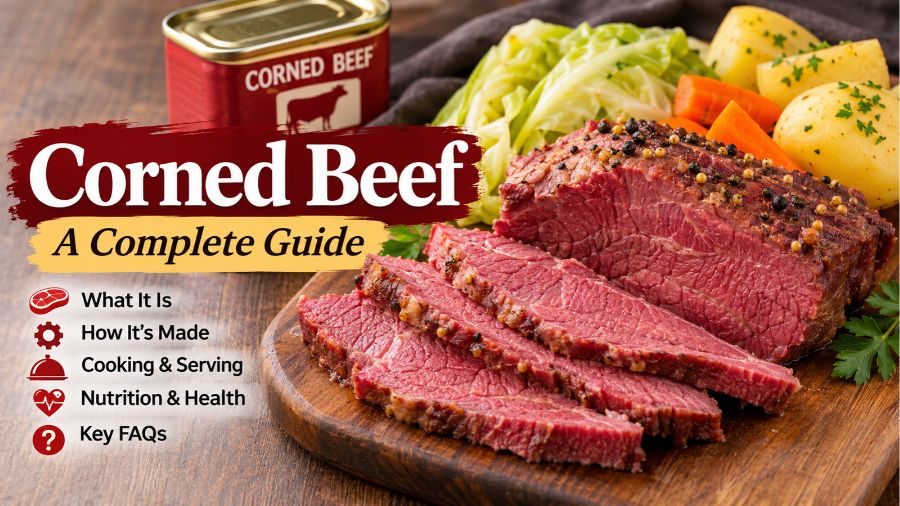
Corned Beef is a popular preserved beef product known for its distinctive salty flavour, tender texture and versatility in everyday cooking. Available in canned, sliced and traditional brisket forms, it is enjoyed in different cuisines around the world, particularly in sandwiches, breakfast dishes and hearty meals. Despite its name, corned beef does not contain corn; the term comes from the large grains of salt historically used to preserve meat. Understanding how corned beef is made, what ingredients it contains, how it differs from other processed meats and whether it is healthy can help consumers make informed food choices.
What Is Corned Beef?
Corned beef is beef that has been preserved through a curing process involving salt and other permitted ingredients. Traditionally, it is prepared using cuts such as brisket, round or rump, which are treated with a seasoned salt solution before being cooked. The curing process gives the meat its characteristic savoury flavour and reddish-pink appearance. Depending on the preparation method, corned beef can be sold as a whole cooked brisket, thinly sliced deli meat or a commercially packaged canned product. It is particularly popular because it combines a long-established preservation technique with convenience and a distinctive taste that works in numerous recipes.
Why Is It Called Corned Beef?
The word corned has a historical connection to the coarse grains of salt once used to preserve meat before modern refrigeration became widely available. These salt crystals were sometimes called corns because of their relatively large size, which resembled grains of cereal. Beef was rubbed with salt or placed in a concentrated curing mixture to slow spoilage and improve its storage life. Over time, wet brining became a common alternative to traditional dry curing, but the original name remained. Consequently, corned beef has nothing to do with sweetcorn, maize or other corn-based ingredients, although some commercial recipes may contain small amounts of sugar.
How Is Corned Beef Made?
The production of corned beef involves selecting suitable beef cuts, preparing a curing mixture, allowing the meat to absorb the seasoning and then cooking or processing it according to the intended product. Salt is an important ingredient because it contributes to preservation and flavour, while approved curing agents such as sodium nitrite may help develop the familiar pink colour and characteristic cured-meat flavour. Additional seasonings can include peppercorns, coriander, mustard seeds and bay leaves. Traditional brisket is generally cured in brine before being slowly cooked, whereas canned corned beef follows a separate manufacturing process involving prepared beef, sealed packaging and heat treatment to produce a shelf-stable product.
Selecting the Beef Cut
Brisket is one of the most recognisable cuts used for traditional corned beef because its connective tissue benefits from prolonged moist cooking. Other suitable cuts can include round, rump and certain rib or shoulder portions. The selected cut influences the final texture, fat content and eating experience. Brisket generally produces a rich, tender result when cooked correctly, while leaner cuts can offer a firmer texture. Commercial production follows applicable product standards, and the exact meat composition can vary depending on the country and product designation.
The Curing and Seasoning Process
During curing, beef is exposed to a mixture containing salt, water and permitted curing ingredients. The meat absorbs the mixture over time, allowing the seasoning to penetrate beyond its surface. Spices contribute additional flavour, although their combinations differ between manufacturers and traditional recipes. Some products use nitrite to support the characteristic cured appearance and flavour. Properly controlled curing is important because preservation depends on suitable ingredients, concentrations, processing conditions and hygiene rather than salt alone.
Different Types of Corned Beef
Corned beef is available in several forms, and understanding their differences helps consumers choose the most suitable option. Canned corned beef is generally chopped or coarsely prepared cured beef that has been heat-processed inside a sealed container. Traditional corned beef brisket is prepared as a whole cut that is cured and slowly cooked until tender. Deli corned beef is usually sliced for sandwiches and other ready-to-serve meals. Although these products share a similar curing tradition, they can differ considerably in texture, preparation, ingredients and storage requirements.
Canned Corned Beef
Canned corned beef is designed for convenience and longer storage before opening. The meat is prepared, seasoned, packed into suitable containers and heat-treated after sealing to achieve commercial shelf stability. It typically has a soft, compact texture that makes it easy to slice, mash or crumble during cooking. Many consumers use it for quick breakfasts, sandwiches, fried potatoes and simple family meals. However, canned products can differ in salt content, fat levels and additional ingredients, making it important to check the nutritional information and ingredient label before purchasing.
Traditional Corned Beef Brisket
Traditional corned beef brisket is prepared from a whole piece of beef rather than the compact mixture commonly found in cans. The meat is cured in seasoned brine and then cooked slowly using methods such as simmering, oven cooking or slow cooking. This process helps soften connective tissue and creates a moist, tender texture. It is frequently served with potatoes, cabbage and other vegetables, particularly in traditional Irish-American meals. Slicing the finished brisket against the grain helps produce more tender portions that are easier to chew.
Deli Corned Beef
Deli corned beef is a ready-to-eat form commonly sold in supermarkets, delicatessens and sandwich shops. It is generally sliced thinly and used in sandwiches, wraps and cold meat platters. Its flavour is savoury and slightly salty, making it suitable for pairing with mustard, pickles, rye bread and cheese. Unlike shelf-stable canned products, refrigerated deli meat requires appropriate cold storage and should be consumed according to its packaging instructions and use-by date.
What Does Corned Beef Taste Like?
Corned beef has a distinctive savoury flavour that combines saltiness with the mild spices used during curing. Traditional brisket is usually tender and moist when cooked properly, while canned versions are softer and may have a slightly crumbly consistency. Its flavour is generally stronger than that of ordinary freshly cooked beef because the curing process introduces additional seasoning. The taste can also vary depending on the cut, curing ingredients, fat content and cooking method. Mustard, black pepper, potatoes, cabbage and pickled vegetables are popular accompaniments because their flavours complement the richness of the meat.
Popular Ways to Cook and Serve Corned Beef
Corned beef is a versatile ingredient that can be incorporated into breakfast, lunch and dinner recipes. Canned meat is particularly useful when preparing quick meals, while traditional brisket is better suited to slow-cooked dishes and larger family gatherings. One popular preparation is corned beef hash, which combines chopped or shredded beef with fried potatoes and onions. Another familiar option is the Reuben sandwich, traditionally made with corned beef, Swiss cheese, sauerkraut, Russian or Thousand Island dressing and rye bread. Corned beef can also be served with boiled cabbage, mashed potatoes, vegetables or rice, depending on regional cooking preferences.
Cooking Corned Beef in a Pot
Simmering is a traditional method for preparing corned beef brisket because it provides consistent moisture throughout cooking. The cured beef is placed in a pot with water or suitable cooking liquid, sometimes accompanied by onions, garlic and additional spices. It is then cooked gently until sufficiently tender. Cooking time depends on the size and thickness of the meat, so checking its internal temperature with a food thermometer is important. For a beef roast, USDA guidance recommends a minimum internal temperature of 145°F (63°C), followed by a resting period of at least three minutes; longer cooking may be needed to achieve the preferred tenderness of brisket.
Frying Canned Corned Beef
Frying canned corned beef is a convenient way to prepare a quick meal. The meat can be removed from the tin, broken into smaller pieces and cooked in a frying pan with onions, potatoes, tomatoes or other vegetables. Some people prefer to allow it to brown slightly, creating a firmer exterior while keeping the inside soft. Since canned corned beef is already cooked, the main purpose of frying is to heat it thoroughly and develop additional flavour. Adding extra salt is often unnecessary because many canned products already contain considerable sodium.
Is Corned Beef Healthy?
Corned beef provides useful nutrients, including protein, iron, zinc and vitamin B12, which contribute to normal body functions. Protein supports muscle maintenance, iron helps the body produce healthy red blood cells, and vitamin B12 contributes to normal nervous system function. However, corned beef is also a processed meat, and many varieties contain substantial amounts of sodium. Some products additionally contain saturated fat and curing preservatives. The nutritional value depends on the cut, recipe, portion size and manufacturing process. Although it can fit into an occasional meal, relying on processed beef as a regular protein source is not the best approach to a balanced diet.
Understanding Processed Meat and Cancer Risk
The World Health Organization classifies processed meat, including corned beef, as carcinogenic to humans under the International Agency for Research on Cancer classification system. This classification reflects sufficient scientific evidence that consuming processed meat causes colorectal cancer. Importantly, Group 1 identifies the strength of evidence that an exposure can cause cancer; it does not mean processed meat carries the same level of risk as tobacco or asbestos. The evidence supports limiting processed meat consumption rather than treating occasional consumption as an immediate health emergency. People seeking a balanced diet can replace some processed meat meals with fresh fish, poultry, beans, lentils and other protein sources.
Sodium and Saturated Fat Considerations
Salt is central to the traditional curing process, which means corned beef can contribute a significant amount of sodium to daily food intake. Regularly consuming too much sodium can increase blood pressure and contribute to cardiovascular health problems. Fat content also varies between brisket, leaner cuts and canned products. Consumers who are monitoring their sodium or saturated fat intake should compare nutrition labels, check serving sizes and avoid adding unnecessary salt during cooking. Choosing smaller portions and serving corned beef alongside vegetables can also help create more balanced meals.
How to Store Corned Beef Safely
Proper storage is important because curing does not eliminate every food safety risk. Commercially canned corned beef can generally remain at room temperature while unopened, provided the packaging is intact and the product is stored according to the manufacturer’s instructions. Once opened, it should be transferred to a suitable covered container and refrigerated promptly. Raw refrigerated corned beef should follow its packaging date and storage instructions, while cooked leftovers should be refrigerated within two hours. USDA guidance recommends keeping cooked corned beef refrigerated for approximately three to four days or freezing it for two to three months for best quality. Reheated leftovers should reach 165°F (74°C).
Corned Beef Around the World
Corned beef has developed different culinary identities across several countries. In the United States, it is strongly associated with Irish-American St. Patrick’s Day celebrations, where it is commonly served with cabbage and potatoes. It is also a familiar sandwich filling, particularly in delis and traditional diners. In the United Kingdom, canned corned beef has long been used in simple home-cooked meals, including corned beef hash and sandwiches. In parts of the Caribbean, it is commonly prepared with onions, peppers, tomatoes and spices. These regional differences demonstrate how a preserved beef product can become part of different food traditions depending on local ingredients and cooking preferences.
How to Choose Good Quality Corned Beef
Selecting a suitable corned beef product requires more than comparing prices or packaging. Consumers should examine the ingredient list to understand whether the product contains beef, added curing ingredients, flavourings and other components. Nutritional labels are particularly useful for comparing sodium, protein and saturated fat between brands. For canned products, check the manufacturing details, expiry or best-before information, country of origin and packaging condition. Avoid tins that are swollen, leaking, badly damaged or deeply dented around seams. Buyers who require halal meat should also check for credible halal certification and verify that the product’s ingredients and manufacturing arrangements meet their requirements rather than assuming every beef product is halal.
Conclusion
Corned beef is a versatile preserved beef product with a long culinary history, several preparation styles and an important place in food traditions around the world. From convenient canned varieties to traditional slow-cooked brisket, it offers distinctive flavour and useful nutrients, including protein, iron and vitamin B12. However, its sodium content and classification as processed meat make moderation an important consideration. Understanding its ingredients, production methods, nutritional limitations and storage requirements allows consumers to enjoy corned beef more responsibly while making informed decisions about their overall diet.
FAQs
1. Does corned beef contain actual corn?
No, corned beef contains no corn by definition. Its name comes from the large grains of salt historically used to cure and preserve beef.
2. Is canned corned beef already cooked?
Yes, commercially produced canned corned beef is heat-processed during manufacturing, making it ready to eat when the sealed packaging remains intact.
3. Is corned beef the same as pastrami?
No, both are cured beef products, but pastrami is typically seasoned with a peppery spice coating and smoked before serving.
4. Can corned beef be eaten every day?
Regular consumption is not recommended because corned beef is processed meat, often high in sodium, and is associated with increased colorectal cancer risk.
5. How long does cooked corned beef last in the refrigerator?
Cooked corned beef generally lasts three to four days when refrigerated promptly in a covered container at 40°F (4°C) or below.
6. Is corned beef suitable for halal diets?
Corned beef can be halal when its beef comes from an appropriately slaughtered animal and its ingredients and manufacturing process meet halal requirements.
Also read: BDSM Test