
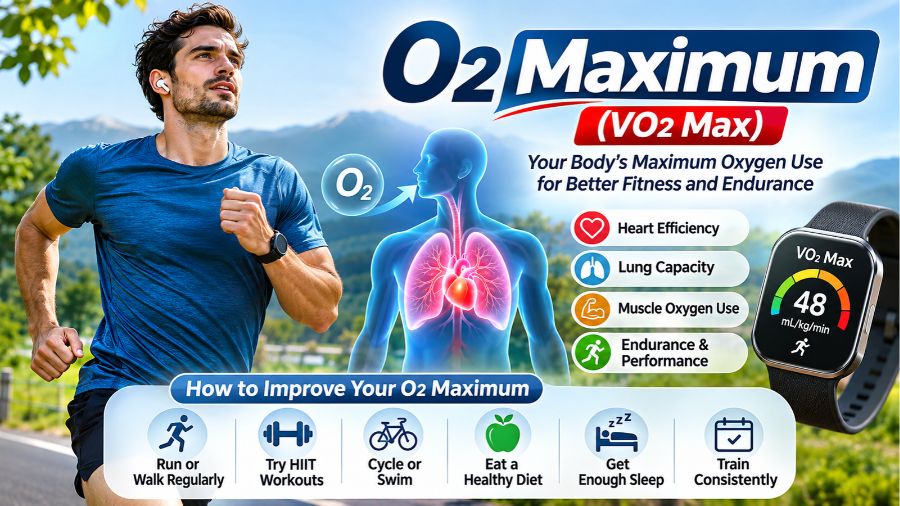
O2 Maximum is an important measure of how efficiently your body uses oxygen during intense physical activity. Also known as VO2 Max or maximal oxygen uptake, it helps explain how well your heart, lungs, blood circulation, and muscles work together when your body needs more energy. Whether you are a professional athlete, a regular gym enthusiast, or someone interested in improving overall health, understanding O2 Maximum can help you make better decisions about physical fitness and exercise.
Many people focus on body weight, muscle strength, or daily step counts when evaluating their fitness. However, aerobic capacity is another important factor that deserves attention. Your O2 Maximum provides useful information about your endurance and your body’s ability to maintain physical activity without becoming exhausted too quickly. The good news is that this measurement is not fixed. With consistent exercise, proper recovery, and healthy lifestyle choices, many people can improve their oxygen utilization and overall cardiovascular fitness.
What Is O2 Maximum?
O2 Maximum refers to the maximum amount of oxygen your body can absorb, transport, and use during intense physical exercise. It is commonly written as VO2 Max, where V represents volume, O2 represents oxygen, and Max refers to the maximum amount your body can utilize. This measurement provides an indication of your aerobic capacity and how effectively your body produces energy using oxygen.
O2 Maximum is generally measured in milliliters of oxygen per kilogram of body weight per minute (mL/kg/min). For example, a person with a VO2 Max score of 45 can use approximately 45 milliliters of oxygen per kilogram of body weight every minute during maximum exercise. A higher score generally indicates better aerobic fitness, although age, sex, genetics, and training history all influence individual results.
Why Is O2 Maximum Important?
O2 Maximum is important because it provides insight into your cardiovascular and respiratory fitness. During exercise, your muscles require additional oxygen to produce the energy needed for movement. Your lungs bring oxygen into the body, your heart pumps oxygen-rich blood, and your muscles use that oxygen to support physical activity. The efficiency of this entire process influences your aerobic performance.
A higher O2 Maximum generally allows you to perform endurance activities more comfortably and maintain physical effort for longer periods. It can be particularly useful for runners, cyclists, swimmers, and other athletes who depend on cardiovascular endurance. Even people who do not participate in competitive sports can benefit from understanding this measurement because aerobic fitness plays an important role in maintaining physical independence and general health as they age.
How Does O2 Maximum Work in the Human Body?
The process behind O2 Maximum involves several interconnected systems. First, your lungs take oxygen from the air you breathe and transfer it into your bloodstream. Oxygen then attaches to hemoglobin in red blood cells, allowing it to travel through your circulatory system. Your heart pumps this oxygen-rich blood toward working muscles, where oxygen is used to produce energy inside cells.
Your muscles also need to extract oxygen efficiently from the blood. This process involves several factors, including blood flow, capillary networks, mitochondria, and the enzymes responsible for energy production. If one part of this system becomes less efficient, your overall aerobic performance may be affected. This explains why O2 Maximum is not simply a measurement of lung capacity. It reflects the combined performance of your respiratory, cardiovascular, and muscular systems.
What Is a Good O2 Maximum Score?
A good O2 Maximum score depends on several personal factors, particularly age and sex. Younger adults generally have higher aerobic capacity than older adults, while average values also differ between men and women. Physical activity levels and genetic characteristics can create additional differences between individuals in the same age group.
For example, a recreational runner may have a different VO2 Max score from an experienced endurance athlete, even if both are healthy. A score that is considered excellent for one person may be average for another. Therefore, it is better to compare your results with appropriate age- and sex-based reference ranges rather than using a single universal target.
The following table provides broad illustrative categories rather than official clinical standards.
| Fitness Level | General Interpretation |
|---|---|
| Low | Below-average aerobic capacity |
| Fair | Developing cardiovascular fitness |
| Good | Solid aerobic endurance |
| Excellent | Strong aerobic capacity |
| Superior | Very high endurance potential |
Your individual score should always be interpreted using an appropriate reference chart and the testing method used to obtain it.
What Factors Affect O2 Maximum?
Several factors influence your body’s maximum oxygen uptake. Genetics play an important role because people naturally differ in heart size, blood volume, muscle composition, and oxygen utilization. Some individuals have a genetic advantage when it comes to endurance performance, while others may need more training to achieve similar results.
Age is another important factor. O2 Maximum generally decreases as people get older, partly because of changes in cardiovascular function and muscle mass. Regular physical activity can help slow this decline. Other influences include body composition, smoking, sleep quality, nutrition, medical conditions, and training consistency. People who spend most of their time sitting may have lower aerobic fitness than individuals who regularly participate in cardiovascular exercise.
How Is O2 Maximum Measured?
There are several ways to estimate or measure O2 Maximum, ranging from professional laboratory testing to wearable fitness devices. The most accurate approach is generally a supervised exercise test performed in a specialized laboratory.
During laboratory testing, a person exercises on a treadmill or stationary bicycle while wearing a breathing mask connected to respiratory analysis equipment. The test gradually increases in intensity while the equipment measures oxygen consumption and carbon dioxide production. The collected information helps specialists determine how much oxygen the body can use during demanding exercise.
Wearable fitness trackers and smartwatches offer another convenient option. Many modern devices estimate VO2 Max using information such as heart rate, running speed, distance, and personal details. These estimates can be useful for monitoring fitness trends, but they are not always as accurate as direct laboratory measurements.
Some fitness professionals also use field tests, including timed running tests and shuttle runs, to estimate aerobic capacity. These methods can provide useful information without requiring expensive equipment, although results depend on the testing protocol and the person’s effort.
How to Improve Your O2 Maximum Naturally
Improving O2 Maximum requires consistent cardiovascular training that gradually challenges your heart, lungs, and muscles. You do not need to become a professional athlete to see progress. A balanced exercise routine, combined with adequate recovery, can help improve aerobic capacity over time.
The most effective approach is to combine different types of cardiovascular exercise rather than depending on one activity. Beginners should start with manageable workouts and gradually increase their exercise duration or intensity. Consistency is more important than attempting extremely difficult sessions without proper preparation.
Include Regular Running and Walking
Running and brisk walking are accessible ways to improve aerobic fitness. Both activities engage large muscle groups and increase the body’s demand for oxygen. Beginners can start with regular walking sessions before gradually introducing short jogging intervals as their fitness improves.
People who already exercise regularly can benefit from longer running sessions at a comfortable pace. These workouts help develop endurance and improve the body’s ability to sustain physical activity. The important thing is to choose an intensity that matches your current fitness level and increase the workload gradually.
Try High-Intensity Interval Training
High-intensity interval training, commonly called HIIT, involves alternating short periods of challenging exercise with easier recovery intervals. For example, someone might cycle quickly for one minute and then pedal slowly for two minutes before repeating the sequence.
This type of training can provide an effective stimulus for improving aerobic capacity, particularly when performed consistently. However, high-intensity exercise places greater demands on the cardiovascular and muscular systems. Beginners should establish a basic fitness foundation before attempting demanding intervals, and people with medical conditions should seek professional guidance.
Add Cycling and Swimming to Your Routine
Cycling and swimming are excellent alternatives to running because they challenge the cardiovascular system while offering different movement patterns. Cycling can be performed outdoors or on a stationary bike, making it suitable for different fitness levels and weather conditions.
Swimming provides a full-body workout that requires coordinated breathing and continuous muscle activity. It can also be a useful low-impact option for people who want to reduce stress on their joints. Both activities can contribute to improved aerobic endurance when performed at an appropriate intensity.
Maintain a Balanced Exercise Schedule
A well-designed exercise schedule should include a combination of easy, moderate, and more challenging workouts. Training at a comfortable pace helps build an aerobic foundation, while occasional higher-intensity sessions can provide additional cardiovascular benefits.
Avoid performing intense workouts every day because your body needs time to recover and adapt. A practical routine may include several moderate cardiovascular sessions, one or two challenging workouts depending on fitness level, and dedicated recovery days. Strength training can also support overall physical performance by improving muscular strength and movement efficiency.
Eat a Healthy Diet for Better Oxygen Utilization
Nutrition supports the body’s ability to perform and recover from exercise. A balanced diet containing carbohydrates, protein, healthy fats, vitamins, and minerals helps maintain energy levels and supports normal muscle function.
Carbohydrates provide an important energy source during physical activity, while protein supports muscle repair and recovery. Iron is also essential because it helps hemoglobin carry oxygen through the bloodstream. People with iron deficiency may experience fatigue and reduced exercise tolerance, so persistent symptoms should be discussed with a healthcare professional rather than treated through unnecessary supplementation.
Drinking enough water is equally important because dehydration can affect exercise performance and make physical activity feel more difficult. Focus on regular, balanced meals and appropriate hydration instead of relying on expensive fitness products or unproven supplements.
Get Enough Sleep and Allow Recovery
Sleep is an essential part of improving physical fitness. During rest, your body repairs tissues, restores energy, and adapts to the demands of exercise. Consistently sleeping too little can affect workout performance, motivation, and recovery.
Most adults benefit from approximately seven to nine hours of sleep each night. Maintaining a regular sleeping schedule, limiting late-night screen exposure, and creating a comfortable sleeping environment can support better recovery.
Rest days are also important because continuous hard training may increase fatigue and reduce performance. If you notice unusual exhaustion, persistent muscle soreness, or declining workout results, consider reducing training intensity and allowing more recovery time.
Can Smartwatches Track O2 Maximum?
Yes, many modern smartwatches and fitness trackers include a VO2 Max estimation feature. These devices use information collected during physical activities, such as heart rate, movement speed, GPS data, and personal fitness details, to estimate aerobic capacity.
The feature can be helpful for people who want to monitor changes in their fitness over several weeks or months. For example, if your estimated score gradually increases while your training remains consistent, it may indicate improving cardiovascular fitness.
However, smartwatch readings should not be treated as exact medical measurements. Results can vary depending on device quality, sensor accuracy, workout conditions, and the activity being performed. For more precise information, supervised laboratory testing remains the preferred option.
O2 Maximum and Overall Health
O2 Maximum is more than an athletic performance measurement. It is also a useful indicator of cardiorespiratory fitness, which is associated with long-term health outcomes. People with better aerobic fitness generally have greater physical capacity and may find everyday activities such as walking, climbing stairs, and carrying groceries easier.
Research has also linked higher cardiorespiratory fitness with a lower risk of several chronic health problems and premature mortality. However, O2 Maximum is only one part of the overall health picture. Blood pressure, cholesterol, blood sugar, body composition, lifestyle habits, and existing medical conditions also matter.
Maintaining good aerobic fitness should therefore be considered part of a broader approach to health rather than a guarantee against disease. Regular checkups and appropriate medical advice remain important, particularly for people with existing cardiovascular or respiratory conditions.
Common Mistakes to Avoid When Improving O2 Maximum
One common mistake is increasing exercise intensity too quickly. People sometimes attempt difficult running sessions or interval workouts before developing sufficient endurance. This can increase fatigue and the risk of injury. A gradual training approach is safer and usually more sustainable.
Another mistake is focusing entirely on smartwatch numbers. Small changes in estimated VO2 Max do not always represent meaningful improvements or declines in fitness. Different weather conditions, fatigue levels, and measurement errors can influence the results.
Some people also underestimate the importance of recovery and nutrition. Training harder without eating properly or sleeping enough can make it difficult to improve performance. Instead of chasing a particular score, focus on consistent exercise, healthy habits, and gradual improvements in endurance.
Conclusion
O2 Maximum is a valuable measurement of how effectively your body takes in, transports, and uses oxygen during intense physical activity. Commonly known as VO2 Max, it provides useful insight into cardiovascular fitness, aerobic endurance, and overall physical performance. Although genetics and age influence your natural capacity, regular exercise and healthy lifestyle choices can help improve or maintain your aerobic fitness.
Activities such as running, walking, cycling, swimming, and interval training can all support better oxygen utilization. Combining these exercises with balanced nutrition, sufficient sleep, and proper recovery creates a sustainable approach to improving physical performance. Whether you are an athlete or simply want to stay active as you age, understanding your O2 Maximum can help you set realistic fitness goals and monitor your progress over time.
FAQs
1. What does O2 Maximum mean?
O2 Maximum refers to the maximum amount of oxygen your body can use during intense physical activity. It is commonly called VO2 Max and is used to assess aerobic capacity and cardiovascular fitness. The measurement is usually expressed in milliliters of oxygen per kilogram of body weight per minute.
2. What is a good O2 Maximum score?
A good O2 Maximum score depends on age, sex, genetics, and physical activity level. Younger individuals and trained endurance athletes generally have higher scores. Instead of comparing your results with everyone else, use appropriate age- and sex-based reference ranges to understand your fitness level.
3. Can I increase my O2 Maximum naturally?
Yes, many people can improve their O2 Maximum through regular cardiovascular exercise. Running, cycling, swimming, brisk walking, and appropriately designed interval training can help improve aerobic capacity. Consistent training, proper nutrition, and sufficient recovery are important for long-term progress.
4. How can I check my O2 Maximum at home?
You can check an estimated O2 Maximum using a compatible smartwatch or fitness tracker. Some devices calculate this measurement using heart rate and exercise performance data. Although these estimates are useful for tracking general trends, laboratory exercise testing provides a more accurate measurement.
5. Does O2 Maximum decrease with age?
Yes, O2 Maximum generally decreases with age because of natural changes in cardiovascular function, muscle mass, and physical capacity. However, regular exercise can help slow this decline and maintain better endurance. Staying physically active throughout life supports mobility, independence, and overall health.
Also read: Fogger Flavors