
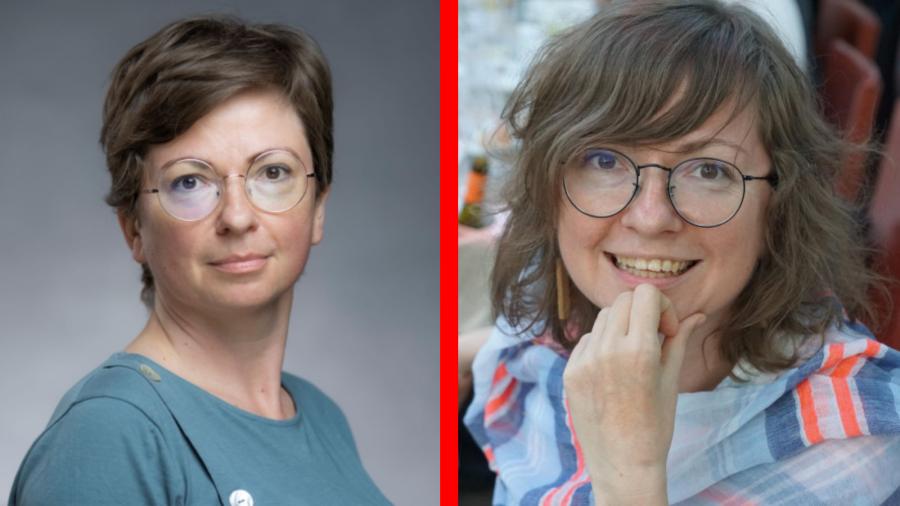
Angelina Davydova has spent more than a decade and a half explaining one of the most complicated subjects in modern journalism: climate policy. If you have ever tried to make sense of a UN climate summit, you know how dense the language gets — carbon markets, loss and damage funds, nationally determined contributions, and a dozen other terms that seem designed to keep ordinary readers out. Davydova has built her career around translating that complexity into something people can actually understand, and she has done it from a part of the world that rarely gets coverage in Western climate media: Russia, Central Asia, and Eastern Europe.
Who Is Angelina Davydova?
At her core, Angelina Davydova is an environmental and climate journalist who writes for international media, NGOs, and think tanks. She is best known among climate-watchers as co-host of The Eurasian Climate Brief, an English-language podcast covering climate issues across Russia and the wider Eurasian region — a part of the world often left out of mainstream climate conversations despite holding massive fossil fuel reserves, vulnerable ecosystems, and complicated geopolitics. Her writing has appeared in outlets like Reuters, Science Magazine, and the Thomson Reuters Foundation, and she has reported on everything from carbon markets to environmental activism under increasingly restrictive political conditions.
What sets her apart from many climate reporters is the depth of her access. She has been an accredited observer at United Nations climate negotiations since 2008, meaning she has personally watched the entire arc of modern climate diplomacy unfold — from the early post-Kyoto years through the Paris Agreement and into today’s implementation disputes. That kind of long-term, on-the-ground perspective is rare, and it shows in how she writes: she is not just reporting headlines, she is contextualizing decisions within years of prior negotiation history.
Early Life and Education
Davydova was born in Leningrad, in the Soviet Union, in 1978. She has spoken publicly about growing up during the perestroika years, when the entire structure of the country she was born in changed almost year by year. That kind of childhood — watching a society transform in real time — tends to produce people comfortable with ambiguity and change, and it is not hard to see echoes of that in how she approaches a subject as fluid and contested as climate policy.
Academically, she trained in economics, earning her degree from St. Petersburg State University of Economics and Finance. That background matters more than it might seem at first glance. Climate journalism is not purely an environmental science beat; a huge portion of it involves understanding energy markets, government budgets, international finance mechanisms, and corporate behavior. An economics foundation gave her the tools to dig into the financial and political dimensions of climate change rather than just the scientific ones, which is part of why her reporting tends to focus heavily on the economic and political angles of climate policy rather than purely environmental storytelling.
Career Path and Major Roles
Davydova did not start out covering the environment. By her own account, she spent her early journalism years writing about economics, only shifting toward environmental and climate reporting around 2008 and 2009. That transition lined up almost exactly with when she began observing UN climate talks, suggesting the two interests fed into each other naturally.
Over the years, she has held a string of serious institutional roles. She served as director of the German-Russian Office of Environmental Information in St. Petersburg, an organization focused on developing environmental journalism across Russia and neighboring countries while building international cooperation on environmental and climate issues. She has also taught journalism at the university level, including at the St. Petersburg State University School of Journalism and at ITMO University, training the next generation of reporters to cover environmental topics responsibly and accurately.
Her fellowships read like a tour of major international journalism and policy institutions. She was a Reuters Foundation Fellow at Oxford University in 2006, took part in the Beahrs Environmental Leadership Program at UC Berkeley in 2012, and was a Humphrey Fellow at UC Davis during the 2018-2019 academic year. Each of these programs is competitive and tends to attract mid-career professionals already doing serious work, which gives a sense of how seriously the international journalism community has taken her contributions.
Life After Relocating to Berlin
A major turning point in her career and personal circumstances came in March 2022, when she relocated from St. Petersburg to Berlin. The timing lines up with the start of the war in Ukraine and the subsequent crackdown on independent media inside Russia, a period during which many journalists left the country rather than continue working under increasingly restrictive press conditions. Since then, she has rebuilt her professional base in Germany, taking on a fellowship with Media in Cooperation and Transition (MICT), a Berlin-based program supporting journalists, and becoming a climate journalism coordinator with n-ost, a network dedicated to cross-border journalism in Eastern Europe and beyond.
This move has not slowed her output. If anything, it has expanded her reach. From Berlin, she continues writing for Russian and international audiences simultaneously, bridging two media ecosystems that have grown increasingly disconnected since 2022. She is also recognized as a Clean Energy Wire (CLEW) ambassador for Russia, Central Asia, and Eastern Europe, a role that essentially makes her a go-to contact for international media organizations trying to understand climate developments in that region.
The Eurasian Climate Brief Podcast
The podcast is worth spending extra time on, since it has become one of her most visible projects. The Eurasian Climate Brief is built specifically to cover climate issues in a region most English-language climate media simply ignores. Russia is one of the largest fossil fuel producers on earth and a major emitter, yet detailed, regular English-language coverage of its climate policy, energy transition debates, and environmental activism has historically been thin. The podcast fills that gap, and as co-host, Davydova brings the same depth of institutional knowledge to the audio format that she brings to her written reporting.
Podcasting also lets her reach an audience print journalism sometimes cannot. Conversational formats tend to make dense policy topics more approachable, and they create room for nuance that a tightly edited news article does not always allow. For someone whose entire professional mission seems to be making complicated climate policy accessible, the podcast format is a natural extension of work she has already been doing for years through writing, teaching, and public speaking.
Recognition and Professional Standing
Davydova’s standing in the climate journalism world is reflected in the institutions that have chosen to associate with her. She has been a member of the World Future Council since October 2020, an organization focused on policy solutions for sustainability and future generations. She regularly gives guest lectures and seminars at universities across Russia, Germany, and the United States, and she runs training programs aimed at helping other journalists and NGO professionals improve their environmental and climate communication skills.
It is also worth noting some online confusion around her name. A separate, unrelated claim has circulated on social media suggesting an “Angelina Davydova” is connected to American actor Eric Lively, brother of Blake Lively. That claim is not supported by any reliable source and appears to stem from mistaken identity or simple name coincidence rather than fact. It has nothing to do with the climate journalist this article is about, and readers searching for accurate information should be cautious about conflating the two.
Angelina Davydova’s Age
Based on her own account in a recorded interview, Davydova was born in Leningrad (now St. Petersburg) in 1978. That places her age in the mid-to-late forties as of the current year, though publicly available biographies do not list an exact birth date, so a precise age cannot be stated with full confidence. What can be said reliably is that she came of age during the final years of the Soviet Union and the chaotic transition that followed, an experience she has described as formative to how she thinks about change and uncertainty, both recurring themes in her climate reporting.
Angelina Davydova’s Family
This is the area where honesty matters most. In a recorded interview, Davydova directly stated that she does not have any siblings. Beyond that single, clearly documented fact, there is no reliable public information about her parents, marital status, or children. Professional biographies from organizations like the World Future Council, Clean Energy Wire, and Global Diplomacy Lab focus exclusively on her career, fellowships, and institutional affiliations, with no details about a spouse or children.
It is worth repeating that the online claim linking an “Angelina Davydova” to actor Eric Lively refers to a different, unverified situation entirely, not to this journalist. Responsible reporting means not filling gaps with speculation, and in this case, the honest answer is that her family life beyond having no siblings simply has not been made public. Readers looking for a confirmed family tree, spouse’s name, or children’s names will not find that information from credible sources, and any article claiming otherwise should be treated with skepticism.
Angelina Davydova’s Net Worth
Net worth figures for working journalists, especially those based outside major Western media markets, are almost never publicly disclosed unless the individual chooses to share that information. Davydova has not published or confirmed any figures related to her income, assets, or overall net worth, and no financial disclosure or verified estimate exists in any established profile written about her career.
What can be reasonably inferred, without putting a number on it, is that her income comes from a combination of freelance journalism fees, fellowship stipends, teaching salaries, speaking engagements, and her coordination role with n-ost. This is a fairly typical income structure for an established freelance journalist who also works in academia and nonprofit coordination, but typical does not mean we can convert it into a specific dollar figure. Any website claiming to know her exact net worth is almost certainly guessing, and readers should treat such numbers with significant skepticism.
Why Her Work Matters
Stepping back from the biographical details, it is worth asking why Davydova’s specific brand of journalism matters in the broader climate conversation. Climate change coverage tends to cluster around a handful of countries — the United States, China, major European nations, and a few prominent voices from the Global South. Russia and its neighboring states get comparatively little sustained attention, despite playing an outsized role in global energy markets and carbon emissions.
By maintaining a dedicated focus on this region for nearly two decades, Davydova has built a body of work that international policymakers, researchers, and other journalists rely on as a primary source of context. Her economics background lets her explain not just what is happening environmentally, but why it is happening from a financial and political standpoint, often the missing piece in climate stories that focus purely on emissions data or weather events. That combination of regional specialization, economic literacy, and journalistic longevity is genuinely uncommon, and it is the real reason her name keeps coming up in serious climate policy circles.
Conclusion
Angelina Davydova’s career is a reminder that some of the most valuable journalism happens away from the loudest headlines. She has spent close to two decades patiently covering a region of the world that climate media too often overlooks, building expertise few other reporters can match. While precise details about her exact age, family situation, and financial standing remain outside the public record, what is fully documented is more than enough to understand why she matters: she is a journalist, educator, and translator of complex policy who has stayed committed to one beat through political upheaval, relocation, and a rapidly shifting media landscape. That kind of consistency is rare, and it is ultimately the most accurate measure of her professional worth, even if it cannot be expressed as a dollar figure.
FAQs
How old is Angelina Davydova?
Based on her own statement that she was born in Leningrad in 1978, she is currently in her mid-to-late forties, though no exact birth date has been publicly confirmed.
Does Angelina Davydova have siblings?
No, she has stated directly in an interview that she does not have any siblings.
Is Angelina Davydova married or does she have children?
There is no publicly confirmed information about her marital status or children, and any claims linking her to unrelated public figures are unverified.
What is Angelina Davydova’s net worth?
No verified net worth figures exist for her, since she has not disclosed financial information and no credible source has published a confirmed estimate.
What is Angelina Davydova best known for?
She is best known for her long-running climate journalism focused on Russia and Eurasia, her role as an observer of UN climate negotiations since 2008, and as co-host of The Eurasian Climate Brief podcast.