
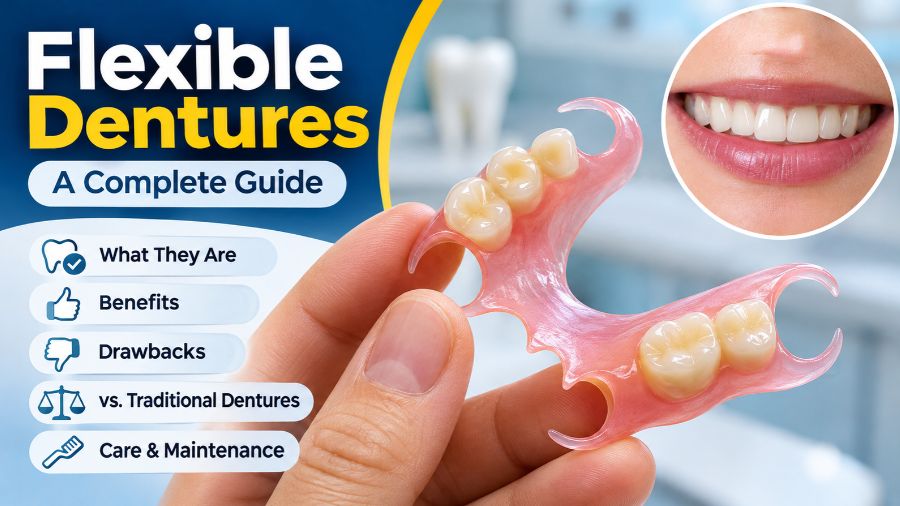
Flexible Dentures are removable dental appliances designed to replace missing teeth using lightweight, bendable materials instead of traditional rigid acrylic or metal frameworks. They have become an option for people seeking a natural-looking smile without the appearance of visible metal clasps. Made primarily from thermoplastic materials such as nylon and polyamide, these dentures offer a different approach to replacing missing teeth. However, their comfort, durability, maintenance requirements, and suitability depend on individual dental conditions. Understanding how flexible dentures work, their advantages and limitations, available materials, and differences from conventional alternatives can help patients make more informed decisions about their oral health.
What Are Flexible Dentures?
Flexible dentures are removable dental prostheses commonly used to replace one or more missing teeth. Unlike conventional acrylic dentures, which have a relatively rigid base, flexible versions are manufactured using thermoplastic materials that can bend slightly under pressure. Their bases and gum-coloured clasps are designed to blend with the surrounding oral tissues, creating a more discreet appearance. These appliances are generally used as partial dentures, although flexible materials have also been investigated for complete denture applications. Their design allows certain sections to adapt around existing teeth and supporting tissues, potentially improving comfort for selected patients. However, flexibility alone does not guarantee better retention, chewing performance, or long-term durability.
How Do Flexible Dentures Work?
Flexible dentures work by replacing missing teeth with artificial dental units attached to a thermoplastic base that rests against the gums and surrounding oral structures. Depending on the design, flexible clasps engage selected natural teeth to help retain the appliance during speaking and eating. The denture is individually manufactured using dental impressions or digital records of the patient’s mouth. A dental laboratory processes the selected thermoplastic material into the required shape, incorporating artificial teeth in the appropriate positions. Once completed, the dentist checks the fit, bite, retention, and comfort before recommending regular use. Because these appliances are removable, patients can take them out for cleaning and routine oral hygiene.
Materials Used in Flexible Dentures
The material used in a flexible denture influences its appearance, flexibility, strength, repairability, and clinical performance. Different thermoplastic formulations are available, and they should not automatically be considered interchangeable. The dentist and dental laboratory select a suitable material according to the patient’s oral condition, prosthetic requirements, and the manufacturer’s processing recommendations.
Nylon and Polyamide
Nylon-based polyamide is among the most commonly discussed materials for flexible partial dentures. It provides flexibility, a relatively lightweight structure, and translucency that can help the denture base blend with natural gum tissue. Polyamide materials can also be manufactured into flexible clasps that avoid the appearance of conventional metal components. However, their physical properties vary according to formulation and manufacturing conditions. Some products may be difficult to repair, reline, or adjust using conventional acrylic techniques. Their long-term performance also depends on proper denture design, laboratory processing, and patient maintenance.
Thermoplastic Resin
Thermoplastic resin is a broader category that includes several materials used in removable dental appliances. These materials soften during controlled heating and can be shaped into a predetermined design before becoming solid again. Depending on the formulation, they may provide different levels of flexibility, rigidity, translucency, and resistance to wear. Not every thermoplastic resin behaves like nylon, so patients should ask which specific material their dentist intends to use rather than assuming all flexible dentures have identical characteristics.
Benefits of Flexible Dentures
Flexible dentures offer several potential advantages, particularly for patients who prioritise appearance and prefer an alternative to conventional metal-clasp designs. Their translucent, gum-coloured bases can make the appliance less noticeable when smiling or speaking. Their lightweight construction and flexible clasps may also provide a comfortable experience for appropriately selected patients. Some individuals appreciate that these dentures avoid prominent metal components, especially when replacing teeth in visible areas. Their flexibility can help the appliance adapt around certain dental structures without the same rigid framework used in conventional designs. Nevertheless, clinical research indicates that these benefits are not universal, and results depend on material selection, denture design, and individual anatomy.
Disadvantages and Limitations of Flexible Dentures
Despite their aesthetic advantages, flexible dentures have limitations that patients should understand before choosing them. Their flexibility may affect how chewing forces are distributed across the remaining teeth and supporting tissues. Some materials can become rough or stained with time, potentially increasing maintenance requirements. Adjustments, repairs, and relining may also be more complicated than with conventional acrylic dentures because standard laboratory techniques are not always suitable. Research has identified concerns involving retention, surface properties, and long-term clinical performance. Flexible dentures may therefore be unsuitable for certain complex dental conditions or extensive tooth replacement needs. A dentist must evaluate the patient’s oral health and explain whether the expected benefits justify these limitations.
Flexible Dentures vs Traditional Acrylic Dentures
Flexible dentures and traditional acrylic dentures serve a similar purpose, but their materials and construction differ considerably. Flexible appliances generally use thermoplastic bases that bend slightly, whereas conventional acrylic dentures commonly use polymethyl methacrylate (PMMA), which produces a more rigid structure. Flexible designs may offer better aesthetics by avoiding visible metal clasps, while acrylic appliances can be easier to modify, repair, and reline in many clinical situations. Acrylic dentures are also often more affordable, although actual prices vary by location, laboratory, and design. Neither option is automatically superior for every patient. The appropriate choice depends on the number and position of missing teeth, supporting structures, bite conditions, appearance preferences, and long-term maintenance requirements.
Who Is a Suitable Candidate for Flexible Dentures?
Flexible dentures may be considered for adults who have missing teeth and need a removable partial replacement with a discreet appearance. They can be an option when conventional metal clasps are undesirable and the remaining natural teeth provide appropriate support for the proposed design. However, suitability requires a professional dental assessment rather than relying on appearance or comfort preferences alone. Patients with extensive tooth loss, unstable supporting teeth, significant gum disease, or complicated bite relationships may require another treatment approach. The dentist should also consider whether the flexible material can provide adequate retention and distribute chewing forces safely. Patients with a history of material sensitivity should discuss the exact product ingredients before treatment.
How Much Do Flexible Dentures Cost?
The cost of flexible dentures depends on the material, number of replacement teeth, complexity of the design, dental laboratory, and professional fees. A small partial denture replacing a limited number of teeth may require different laboratory work from a larger appliance with multiple artificial teeth. Imported materials, branded systems, and specialist laboratory processing can also influence the final price. In countries such as Pakistan, prices may differ significantly between private dental clinics and laboratories, so there is no single reliable price that applies to every patient. Patients should request a written treatment estimate covering consultation, impressions, fabrication, fitting, adjustments, and possible future maintenance. The cheapest option may not provide the most appropriate long-term solution.
How Are Flexible Dentures Made and Fitted?
The process of making flexible dentures usually begins with a dental examination to assess missing teeth, gum health, remaining natural teeth, and the patient’s bite. The dentist then takes impressions or digital scans to create an accurate representation of the mouth. These records are used to design the appliance and determine the position of the artificial teeth and retaining components. A dental laboratory processes the selected thermoplastic material using equipment and temperatures appropriate for that particular product. After fabrication, the dentist checks the appliance for pressure points, stability, retention, and bite alignment. Additional adjustments may be necessary before the patient becomes comfortable wearing it. Follow-up appointments help identify problems that might not be apparent during the initial fitting.
How to Clean and Maintain Flexible Dentures
Proper cleaning is essential because removable dentures can collect food particles, plaque, stains, and microorganisms. Flexible materials require particular attention because inappropriate cleaning products or excessive heat may damage their structure. Patients should follow the cleaning instructions supplied by their dentist and the manufacturer rather than assuming every denture material can tolerate the same products. Daily cleaning, careful handling, and regular professional examinations help maintain the appliance and protect the surrounding oral tissues.
Daily Cleaning Routine
Remove the denture and gently clean all accessible surfaces using a soft denture brush and a cleaning product recommended for its specific material. Avoid aggressive scrubbing and abrasive household products that may damage or roughen the surface. Denture cleansers should only be used outside the mouth, and the appliance should be thoroughly rinsed before reinsertion. Patients should also clean their natural teeth, gums, and tongue to reduce plaque accumulation and support overall oral hygiene.
Proper Storage
Flexible dentures should be stored according to the manufacturer’s instructions when they are not being worn. Some materials require moisture-controlled storage to help maintain their shape, while others have specific product recommendations. Avoid boiling water, direct heat, and leaving the appliance in unsuitable cleaning solutions. Patients should handle the denture carefully over a folded towel or a basin of water to reduce the risk of accidental damage if it slips from their hands.
Regular Dental Checkups
Regular dental examinations help identify changes in denture fit, gum condition, supporting teeth, and bite alignment. Natural changes in the mouth can make an initially comfortable appliance loose or uncomfortable over time. Patients should seek professional advice if they develop persistent soreness, bleeding, difficulty chewing, or movement of the denture. They should never attempt to bend, reshape, or repair a flexible denture themselves because improper modifications may permanently damage the appliance.
Common Problems Associated With Flexible Dentures
Some patients experience difficulty adapting to a new denture, particularly during the initial period of speaking and eating. Increased saliva production, mild pressure, and temporary changes in pronunciation can occur while the mouth adjusts. More persistent problems may include poor retention, food trapping, gum irritation, staining, or changes in the denture’s surface. These issues should not be ignored because an unsuitable fit can place unnecessary pressure on supporting tissues and natural teeth. Professional assessment can determine whether the problem requires an adjustment, a different design, or replacement. A flexible denture that repeatedly causes discomfort should not be considered acceptable simply because its material is designed to bend.
Are Flexible Dentures Better Than Dental Implants?
Flexible dentures and dental implants are different treatment options rather than direct substitutes in every situation. Flexible dentures are removable appliances that replace missing teeth using a thermoplastic base and artificial teeth. Dental implants are surgically placed fixtures that support replacement teeth and can provide a fixed or removable restoration depending on the treatment design. Implants may offer greater stability in suitable patients, but they involve surgery, healing time, additional clinical considerations, and generally higher treatment costs. Flexible dentures avoid implant surgery but require daily removal and cleaning. The decision depends on oral health, available bone, medical considerations, budget, and personal preferences. A dentist can explain whether implants, flexible dentures, conventional dentures, or another prosthetic option is appropriate.
What Does Research Say About Flexible Dentures?
Research on flexible dentures has examined their appearance, comfort, retention, mechanical properties, and clinical performance compared with conventional removable dentures. A 2024 literature review discussed differences in physical and mechanical properties between flexible materials and conventional polymethyl methacrylate. It identified limitations involving certain material characteristics and highlighted the need to consider individual indications carefully. A separate 2025 evidence review by Canada’s health technology assessment agency examined clinical studies comparing flexible and conventional dentures. Its findings suggested that flexible appliances may perform better for certain aesthetic and satisfaction outcomes, while results for retention, chewing ability, maintenance, and other measures were inconsistent. The available evidence also provides limited information about durability over the full lifespan of a denture. Consequently, flexible dentures should be selected according to clinical requirements rather than marketing claims alone.
Conclusion
Flexible dentures provide an alternative approach to replacing missing teeth, particularly for patients who value a natural-looking appearance and want to avoid visible metal clasps. Their lightweight thermoplastic construction offers potential advantages in comfort and aesthetics, but limitations involving retention, repairs, adjustments, staining, and long-term performance must also be considered. Traditional acrylic dentures and dental implants may be more appropriate for certain clinical situations. The most suitable option depends on oral health, the number of missing teeth, supporting structures, budget, and individual treatment goals. A professional dental examination, clear discussion of material options, and proper ongoing maintenance are essential for achieving a comfortable and functional result.
FAQs
1. How long do flexible dentures last?
Their lifespan varies with material quality, oral changes, usage, and maintenance. Regular dental examinations help identify wear, poor fit, and replacement needs.
2. Can you eat normally with flexible dentures?
Most patients can gradually adapt to eating with removable dentures, although hard or sticky foods may initially cause discomfort or appliance movement.
3. Are flexible dentures comfortable to wear?
Many patients appreciate their lightweight construction and flexible clasps, but comfort depends on proper fitting, denture design, and individual oral anatomy.
4. Can flexible dentures be repaired if broken?
Repairs are possible in some cases, but thermoplastic materials can be difficult to modify. A dentist or qualified laboratory should assess the damage.
5. Are flexible dentures suitable for replacing all teeth?
Flexible materials can be used in certain complete denture designs, but suitability varies. A dentist must assess jaw anatomy, support, and functional requirements.
6. Do flexible dentures look natural?
Their translucent bases and gum-coloured clasps can create a discreet appearance, although the final result depends on material selection and accurate fabrication.
Also read: Rook Piercing