
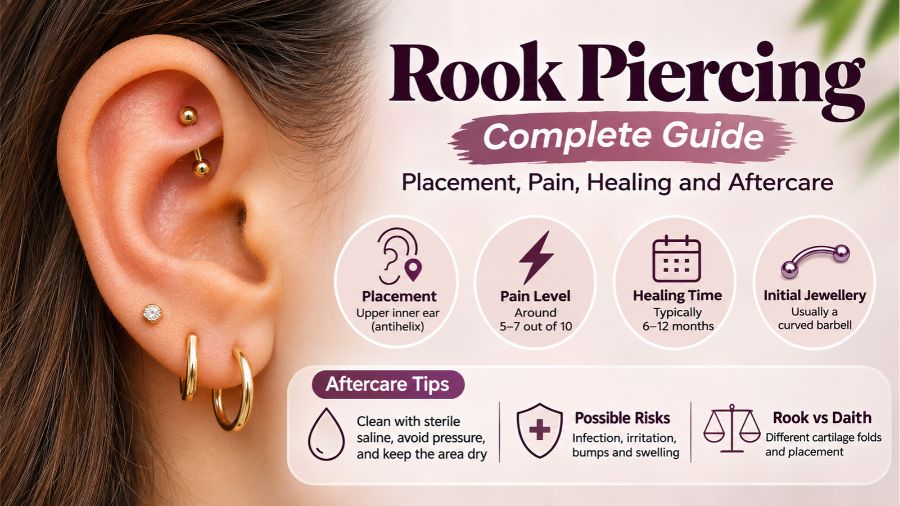
Rook Piercing is a popular cartilage piercing that offers a distinctive look through the upper inner fold of the ear. Known for its unique placement and stylish jewellery options, it has become an appealing choice for people who want something different from traditional ear piercings. However, understanding its anatomy, pain level, healing time, jewellery choices, aftercare requirements, and potential complications is important before getting one. This guide explains what a rook piercing involves, how to care for it, and what to consider when deciding whether it suits your ear.
What Is a Rook Piercing?
A rook piercing is an ear cartilage piercing that passes through the small raised fold of cartilage located in the upper inner part of the ear. This fold is called the antihelix, and the piercing usually sits above the daith and toward the inner side of the upper ear. Unlike standard earlobe piercings, which pass through soft tissue, a rook piercing involves thicker cartilage, making its placement more specialised. Its distinctive position allows jewellery to sit within the natural contours of the ear, creating a subtle but noticeable appearance. The piercing is particularly popular among people interested in curated ear styling because it adds detail without requiring a large or prominent piece of jewellery.
Where Is a Rook Piercing Located?
A rook piercing is positioned in the upper inner cartilage fold, between the outer ridge of the ear and the inner cartilage structures. Its exact position depends on the individual’s anatomy because not everyone has a sufficiently developed antihelix fold to support this type of piercing. The rook is located above the daith, which passes through a different inner cartilage fold, and below the upper section of the helix area. Its relatively protected position makes it visually distinctive compared with more exposed cartilage piercings. Before proceeding, an experienced professional piercer should examine the ear from different angles to determine whether the cartilage has enough depth and suitable space for safe jewellery placement.
How Painful Is a Rook Piercing?
Rook piercing pain varies between individuals, but it is generally considered more uncomfortable than a traditional earlobe piercing because the needle passes through dense cartilage. Some people describe the sensation as a sharp pinch followed by pressure, while others experience a brief aching feeling during the procedure. An approximate rating of 5–7 out of 10 is sometimes used in piercing discussions, although this is subjective rather than a medically established measurement. The experience also depends on individual pain sensitivity, technique, anatomy, and the professional performing the procedure. Some tenderness, mild swelling, and local discomfort are expected initially, but severe or increasing pain should not be dismissed as normal healing.
How Long Does a Rook Piercing Take to Heal?
A rook piercing typically takes around six to twelve months to heal fully, although some piercings may require longer. Cartilage receives less blood supply than the soft tissue of the earlobe, which contributes to its slower healing process. During this period, the piercing may experience occasional tenderness, mild swelling, itching, or small amounts of pale discharge that form crust around the jewellery. These changes can occur during normal healing, but persistent irritation may indicate pressure, unsuitable jewellery, or inadequate aftercare. It is also important to understand that a piercing can look healed externally while the internal tissue remains fragile. Jewellery should not be changed simply because the area appears comfortable. A qualified piercer can assess healing and advise when a jewellery change is appropriate.
Best Jewellery for a Rook Piercing
Jewellery selection plays an important role in the appearance and comfort of a rook piercing. Because the piercing passes through a curved cartilage fold, the jewellery must have suitable dimensions, material, and shape. A professional piercer should select an appropriate initial piece based on the individual’s anatomy and expected swelling. Implant-grade titanium is a commonly recommended material because it is suitable for many people with metal sensitivities when it meets recognised implant specifications. Properly manufactured solid 14-karat or 18-karat nickel-free gold can also be considered once appropriate for the piercing. Poor-quality jewellery, incorrect sizing, and rough surfaces can contribute to irritation and delayed healing.
Curved Barbells
A curved barbell is a common jewellery choice for a rook piercing, particularly during the initial healing period. Its curved shape follows the natural contour of the cartilage and allows the jewellery ends to sit comfortably on either side of the piercing. The length and thickness must be selected carefully to accommodate swelling without creating unnecessary pressure. An experienced piercer should determine whether a particular curved barbell is suitable for the individual’s anatomy rather than relying on a standard size.
Hoop and Ring Jewellery
Small hoops and rings can create an attractive appearance once the piercing has healed sufficiently. They are popular among people who prefer a circular jewellery style or want to coordinate their rook with other ear piercings. However, rings can move more freely than curved barbells, potentially increasing friction in a healing piercing. For this reason, they are not automatically suitable as initial jewellery. A professional should confirm that the piercing is fully healed and that the ring has an appropriate diameter before recommending a change.
Gold and Titanium Jewellery
Gold and titanium are two popular jewellery materials for cartilage piercings. Implant-grade titanium is particularly useful for people concerned about nickel sensitivity, while suitable solid gold offers a more decorative appearance. Jewellery should have a smooth finish, secure construction, and appropriate dimensions. Gold-plated, gold-filled, and low-quality fashion jewellery should not be treated as equivalent to properly manufactured solid gold piercing jewellery. Material quality matters because jewellery remains in contact with healing tissue for an extended period.
Rook Piercing Aftercare: How to Keep It Clean
Proper aftercare is essential because cartilage piercings can remain vulnerable to irritation throughout their healing period. The Association of Professional Piercers recommends using sterile saline wound wash containing 0.9% sodium chloride as the only active ingredient, rather than preparing an overly concentrated homemade salt solution. Hands should be washed thoroughly before touching the area, and unnecessary movement of the jewellery should be avoided. Cleaning should be gentle, with the area dried using clean disposable gauze or another suitable disposable product. Alcohol, hydrogen peroxide, harsh antibacterial products, and excessive cleaning can irritate healing tissue. Keeping pillowcases clean and avoiding pressure from headphones, phones, hair accessories, and sleeping positions can also help protect the piercing.
Common Rook Piercing Problems and Complications
Although a rook piercing can heal successfully, it carries potential complications like other cartilage piercings. Irritation bumps, swelling, tenderness, metal sensitivity, and infection are among the problems that may develop. Repeated pressure, jewellery that does not fit correctly, and poor hygiene can contribute to discomfort. Cartilage infections deserve particular attention because they can become serious and may damage the surrounding tissue if treatment is delayed. Increasing redness, warmth, severe pain, significant swelling, thick discharge, or fever should prompt medical assessment. A person who suspects an infection should not independently remove the jewellery, as doing so may complicate drainage. Medical advice should guide decisions about treatment and jewellery removal.
Rook Piercing Bumps
Small bumps can develop around a cartilage piercing because of irritation, pressure, inflammation, or changes in the healing tissue. They are not necessarily infections or keloids, although these conditions can sometimes appear similar. Repeatedly touching the piercing, sleeping on the affected ear, or wearing unsuitable jewellery may make irritation worse. Avoid squeezing, picking, or applying unapproved treatments to a bump. A professional piercer can assess jewellery fit and placement, while a dermatologist or other qualified healthcare professional can evaluate persistent or unusual skin changes.
Rook Piercing Infection
An infected rook piercing may become increasingly painful, hot, swollen, or red, and it may produce pus or other unusual discharge. Some initial tenderness and mild swelling are expected, but symptoms that worsen rather than improve require attention. Cartilage infections can have more serious consequences than uncomplicated earlobe infections. Anyone experiencing significant pain, spreading redness, fever, or feeling generally unwell should seek prompt medical care. Antibiotics or other treatment may be required depending on the diagnosis. Jewellery should remain in place unless a healthcare professional advises otherwise.
Rook Piercing vs Daith Piercing: What Is the Difference?
Rook and daith piercings are both located in the inner cartilage of the ear, but they pass through different anatomical folds. A rook piercing sits in the upper antihelix, while a daith piercing passes through the innermost cartilage fold above the ear canal. Their jewellery styles can also differ depending on the available space and individual anatomy. Both require careful placement and extended healing periods. Some people choose both piercings to create a layered ear design, but their suitability depends on the structure of the ear and the availability of sufficient cartilage. Neither piercing has established scientific evidence supporting claims that it treats migraines.
Is a Rook Piercing Suitable for Everyone?
A rook piercing is not suitable for every ear because the procedure requires a sufficiently prominent cartilage fold. People with shallow or differently shaped antihelix anatomy may not have enough space for appropriate jewellery placement. A professional piercer should assess the ear before recommending the procedure. Existing cartilage damage, active skin problems, previous piercing complications, and certain health conditions may also affect whether getting pierced is advisable. Anyone with concerns about healing, infection risk, or an existing medical condition should discuss them with a healthcare professional before proceeding. Choosing a suitable piercing location is more important than trying to achieve a particular jewellery style.
How to Choose a Professional Rook Piercer
Choosing an experienced professional is one of the most important decisions when considering a rook piercing. Look for a reputable studio that follows appropriate hygiene procedures, uses sterile single-use needles, and has suitable sterilisation equipment for reusable instruments. The piercer should explain the placement, jewellery material, expected swelling, healing period, and aftercare instructions before starting. They should also be willing to decline the procedure if your anatomy is unsuitable. A professional should never pressure someone into getting a piercing or promise that complications cannot occur. Clear communication, appropriate jewellery selection, and good hygiene practices help reduce avoidable risks.
Conclusion
A rook piercing offers a distinctive way to style the upper inner ear, combining a unique cartilage placement with several attractive jewellery options. However, its appearance is only one consideration when deciding whether to get one. Understanding the anatomy, expected discomfort, six-to-twelve-month healing period, jewellery requirements, and potential complications helps people make informed decisions. Proper aftercare, suitable jewellery, and professional placement are essential throughout the healing process. Anyone considering this piercing should prioritise ear anatomy, hygiene, and long-term comfort rather than choosing a style based on appearance alone.
FAQs
1. Does a rook piercing hurt more than an earlobe piercing?
Yes, a rook piercing generally feels more uncomfortable because it passes through thick cartilage, whereas an earlobe piercing involves softer tissue.
2. How long does a rook piercing take to heal completely?
Most rook piercings take approximately six to twelve months to heal, although individual healing times vary depending on anatomy, aftercare, and irritation.
3. Can you sleep on a rook piercing?
It is best to avoid sleeping directly on a healing rook piercing because pressure can cause irritation, swelling, and changes in jewellery positioning.
4. What jewellery is best for a new rook piercing?
A properly fitted curved barbell made from implant-grade titanium is a common initial option, selected according to individual ear anatomy.
5. Can a rook piercing help with migraines?
There is no reliable scientific evidence that rook piercings prevent or treat migraines, despite claims sometimes made about cartilage piercings.
6. What should you do if a rook piercing becomes infected?
Seek prompt medical assessment if infection is suspected, particularly with increasing pain, swelling, warmth, pus, or fever. Do not remove jewellery without medical advice.
Also read: Corned Beef