
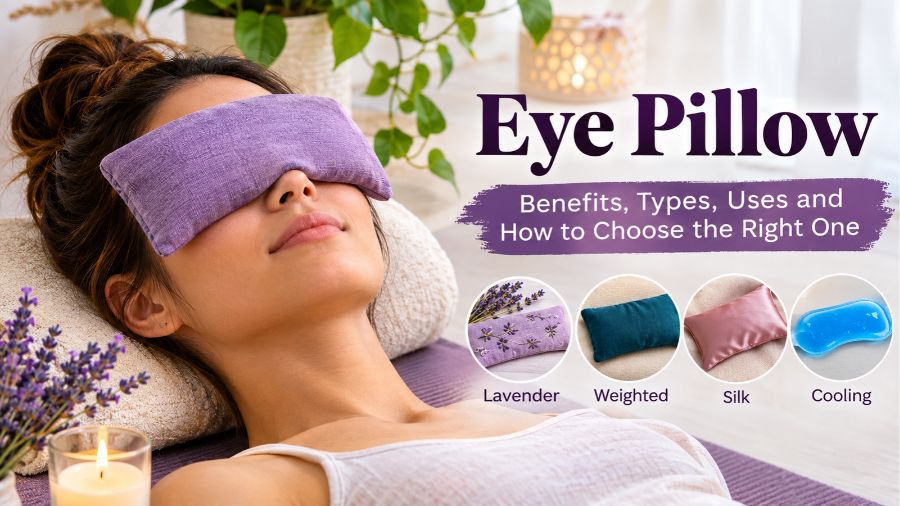
Eye Pillow is a simple relaxation accessory designed to rest gently over closed eyes, helping block out light and create a more comfortable environment for relaxation, meditation, yoga, and bedtime routines. Often filled with flaxseeds, rice, buckwheat hulls, or aromatic herbs such as lavender, this small cushion combines gentle weight with a soft covering to support moments of rest. Whether someone wants to improve their meditation experience, unwind after a busy day, or create a calming sleep environment, understanding how an eye pillow works, its different types, potential benefits, and safety considerations can help them decide whether it is a useful addition to their daily routine.
What Is an Eye Pillow and How Does It Work?
An eye pillow is a small, soft cushion specifically designed to cover the closed eyes and surrounding area without requiring straps or complicated adjustments. Its construction usually consists of an outer fabric cover and an inner pouch containing natural or synthetic filling. When placed over the eyes, the pillow creates a gentle sense of weight while reducing exposure to surrounding light. Some designs also include dried flowers or essential-oil fragrances to create an aromatic relaxation experience. Unlike ordinary pillows, eye pillows are intentionally compact and lightweight, allowing them to sit comfortably across the upper face. Their simple design makes them suitable for different relaxation activities, including yoga, meditation, breathing exercises, and short breaks during the day.
Main Benefits of Using an Eye Pillow
The popularity of eye pillows comes from their ability to combine physical comfort, light reduction, and relaxation in one convenient accessory. Covering the eyes can reduce visual distractions, while gentle weight may help some people feel more settled during quiet activities. A comfortable eye pillow can also become part of a consistent bedtime or meditation routine, helping create an environment associated with rest. However, its benefits should be understood realistically because an ordinary weighted eye pillow is not a medical treatment for insomnia, headaches, eye strain, or other health conditions.
Supports Relaxation and Stress Management
One of the most common reasons people use an eye pillow is to create a more relaxing atmosphere after a demanding day. Resting with closed eyes removes many visual distractions, while the soft fabric and gentle pressure can make a relaxation session feel more comfortable. Some versions contain lavender or other aromatic ingredients that provide a pleasant fragrance. The experience may complement breathing exercises, mindfulness, and other calming activities. Although individual responses differ, an eye pillow can be a practical addition to a personal relaxation routine without requiring electronic devices or complicated equipment.
Creates a More Comfortable Sleep Environment
Light entering a bedroom can interfere with a comfortable sleeping environment, particularly for people who work night shifts, travel frequently, or sleep during daylight hours. An eye pillow can help cover the eyes and reduce unwanted light exposure. Research published in the journal Sleep in 2023 examined how wearing an eye mask overnight affected learning and alertness in young adults, reporting improvements in certain memory and attention measures. However, these findings concern light-blocking eye masks rather than weighted aromatherapy eye pillows specifically. The practical advantage of an eye pillow is therefore its ability to create darkness and comfort, not a guaranteed improvement in sleep quality.
Enhances Yoga and Meditation Sessions
Eye pillows are frequently associated with restorative yoga, mindfulness, and meditation because they provide a simple way to reduce visual stimulation. During Savasana, the final resting posture in many yoga sessions, practitioners lie comfortably on their backs and allow their bodies to relax. A lightweight eye pillow can make this experience more comfortable by covering the eyes and creating a gentle sense of pressure. It may also help people remain focused on breathing rather than their surroundings. However, the pillow should always feel comfortable and should never place excessive pressure on the eyelids or eyeballs.
Provides a Soothing Sensory Experience
An eye pillow can offer a combination of soft textures, gentle weight, darkness, and fragrance. These sensory elements may make relaxation more enjoyable for people who prefer simple, non-electronic wellness accessories. A cotton or silk cover provides a soft surface against the skin, while natural fillings create a distinctive texture and weight. Aromatic varieties introduce another sensory element through dried herbs or fragrance ingredients. People who are sensitive to perfumes should choose an unscented version, as strong fragrances may cause discomfort rather than relaxation.
Different Types of Eye Pillows Available
Eye pillows are available in several designs, each offering a different experience based on its filling, fabric, weight, and intended use. Some prioritize natural materials and aromatherapy, while others focus on cooling, softness, or light reduction. Understanding these differences makes it easier to select a product that suits personal preferences and daily routines. The most important consideration is not the number of additional features but whether the pillow feels comfortable, is easy to maintain, and performs its intended function.
Lavender Eye Pillows
Lavender eye pillows combine a soft outer covering with filling that may include flaxseeds and dried lavender buds. They are particularly popular among people who enjoy aromatherapy and want a pleasant fragrance during meditation or bedtime relaxation. The lavender scent provides an additional sensory experience, while the filling gives the cushion its shape and weight. However, the fragrance may gradually become weaker as the product ages. People with fragrance allergies, asthma triggers, or sensitivity to essential oils should consider an unscented alternative before purchasing an aromatic design.
Weighted Eye Pillows
Weighted eye pillows use materials such as flaxseeds, rice, or buckwheat hulls to create gentle pressure when placed over closed eyes. Their main purpose is to provide a comfortable resting sensation rather than deliver a therapeutic treatment. Different products have different weights, so choosing a lightweight design is generally a sensible starting point for first-time users. A well-designed weighted cushion should distribute its filling evenly and remain comfortable without pressing heavily against the face. People who dislike pressure around their eyes may prefer an unweighted fabric alternative.
Silk Eye Pillows
Silk eye pillows are designed for people who prefer a smooth and soft material against their skin. Their attractive appearance also makes them popular as relaxation accessories and gifts. Silk is generally lightweight and has a naturally smooth surface, making it an appealing choice for people who dislike rougher fabrics. However, silk products may require more careful cleaning than ordinary cotton versions, depending on the manufacturer’s instructions. Buyers should also check whether the filling is removable because this can make routine maintenance easier.
Cooling Eye Pillows
Cooling eye pillows are designed to provide a refreshing sensation around the eyes and may use gel inserts or materials that can be chilled before use. They are different from traditional flaxseed-filled cushions because their main purpose is temperature-based comfort rather than gentle weighted relaxation. A cool, clean compress may temporarily soothe the surrounding skin, but it should not be excessively cold or applied directly from a freezer without suitable protection. People experiencing eye pain, swelling, or persistent irritation should seek appropriate medical guidance instead of relying on a cooling accessory.
Unscented Natural Eye Pillows
Unscented eye pillows are suitable for people who prefer natural materials without additional fragrances. They may contain flaxseeds, rice, or buckwheat hulls inside a cotton or linen cover. Their straightforward construction makes them useful for yoga, meditation, and everyday relaxation. These designs are also worth considering for people who find lavender or other aromatic ingredients overwhelming. When choosing a natural eye pillow, buyers should examine the fabric quality, stitching, filling distribution, and cleaning instructions rather than assuming that natural materials automatically guarantee better quality.
Common Materials Used in Eye Pillows
The materials used in an eye pillow influence its weight, softness, durability, fragrance, and maintenance requirements. Flaxseeds are a popular filling because their small size allows the cushion to distribute its weight across the covered area. Rice provides another affordable filling option, although its texture and weight distribution can differ from flaxseed. Buckwheat hulls offer a distinctive texture, while dried lavender and chamomile may be included for fragrance. Cotton and linen are common outer-cover materials because they provide practical fabric options, whereas silk is often selected for its smooth feel. Before purchasing, it is important to check the filling composition, fabric quality, and whether the inner pouch can be removed for cleaning.
How to Choose the Right Eye Pillow
Choosing the right eye pillow involves considering comfort, material quality, intended use, and maintenance. Someone purchasing a pillow for meditation may prefer a lightly weighted flaxseed design, while someone looking for a sleep accessory may prioritize a comfortable shape that blocks surrounding light. Fabric is equally important because the cushion rests directly against sensitive facial skin. A removable and washable cover can make long-term use more convenient, particularly when the product is used regularly. Buyers should also examine stitching and filling distribution to avoid designs that develop uncomfortable lumps. Instead of selecting a product based only on appearance, it is better to consider how it will fit into an individual’s routine.
Consider Weight and Size
The weight of an eye pillow can significantly influence the overall experience. A lightweight cushion may feel more comfortable for beginners, while a slightly heavier version may appeal to people who enjoy gentle pressure during meditation. However, more weight does not automatically mean better quality or greater benefits. The dimensions should also be suitable for the face, allowing the cushion to cover the closed eyes without extending excessively over the nose or applying pressure to sensitive areas. A properly sized product should remain comfortable throughout the intended relaxation session.
Choose Skin-Friendly Fabric
Because an eye pillow comes into direct contact with the face, its outer material deserves careful attention. Cotton is a practical choice for everyday use because it is commonly available and relatively easy to maintain. Silk offers a smoother texture, while linen provides another natural-fabric option. People with sensitive skin should pay attention to fabric dyes, fragrances, and other ingredients that may cause irritation. A removable cover is particularly useful because it allows the fabric to be washed separately from the filling.
Check Filling and Cleaning Instructions
A quality eye pillow should have secure stitching and filling that remains evenly distributed during normal use. Some designs include a removable inner pouch, making it easier to clean the outer cover without damaging the filling. Natural materials can absorb moisture and may develop unpleasant odours if stored incorrectly, so keeping the product dry is important. Buyers should follow the manufacturer’s cleaning instructions instead of automatically washing or heating the entire cushion. Products containing dried flowers or special inserts may require different care from ordinary fabric accessories.
How to Use an Eye Pillow Correctly
Using an eye pillow is generally straightforward, but a comfortable position and appropriate handling make a difference. Begin by choosing a quiet place where you can sit or lie down without interruption. Close your eyes and gently position the cushion across the eyelids, ensuring that it rests naturally without applying unnecessary pressure. Allow yourself to relax for a short session while breathing normally. Many people prefer using an eye pillow during meditation, yoga relaxation, or before bedtime. Remove it immediately if you experience discomfort, irritation, unusual pressure, or breathing difficulties caused by its positioning.
Using an Eye Pillow During Yoga
During restorative yoga, an eye pillow can be placed over closed eyes while practising a comfortable resting posture. It is particularly suitable for Savasana, when the body remains still and attention shifts towards relaxation. The cushion should be light enough to rest naturally without creating tension around the forehead or face. Yoga practitioners can select an unscented or lavender-filled version according to their preferences. Its role is to improve comfort during relaxation rather than replace proper yoga technique or professional instruction.
Using an Eye Pillow Before Bedtime
An eye pillow can become part of a simple nighttime routine by helping reduce exposure to bedroom lighting. Users can place it over their closed eyes while resting comfortably before sleep, provided the design does not create uncomfortable pressure. People who prefer to sleep throughout the night should consider whether a traditional pillow or a properly fitted sleep mask is more practical. A weighted relaxation cushion may shift during movement, making it less suitable for overnight use. Comfort and personal sleeping habits should guide the decision.
Eye Pillow vs Sleep Mask: Understanding the Difference
Although eye pillows and sleep masks both cover the eyes, they are designed with different priorities. A traditional sleep mask usually features a lightweight fabric covering with an adjustable strap, allowing it to remain in position during overnight sleep. An eye pillow is generally a small cushion that rests over closed eyes without straps and may contain weighted or aromatic filling. Sleep masks are often more practical for frequent travellers, shift workers, and people who need consistent light blocking. Eye pillows are more commonly used during shorter relaxation sessions, meditation, and yoga. Some products combine elements of both designs, but buyers should check their construction before assuming that they are interchangeable.
Potential Limitations and Safety Considerations
Despite their popularity, eye pillows have limitations that buyers should understand. Their benefits mainly relate to comfort, relaxation, and reducing exposure to light rather than treating medical conditions. A cushion that is too heavy may create uncomfortable pressure, while poorly maintained fabric or filling may collect dust, moisture, and other unwanted particles. Fragranced varieties may also irritate people who are sensitive to perfumes or botanical ingredients. Eye pillows should not be placed over open eyes, used to apply pressure to the eyeballs, or treated as a substitute for medical care. Anyone with recent eye surgery, an eye injury, glaucoma, or another condition requiring pressure precautions should ask an eye-care professional before using a weighted design. Cooling products should also be handled carefully because excessive cold can damage delicate skin.
Who Can Benefit From Using an Eye Pillow?
An eye pillow may appeal to people who enjoy yoga, meditation, mindfulness, or simple relaxation activities at home. Office workers may find it useful during short breaks when they want to reduce visual distractions, while travellers may prefer a lightweight design for occasional rest. People who sleep in bright environments might appreciate its light-blocking qualities, although a conventional sleep mask may be more suitable for overnight use. Aromatherapy enthusiasts may choose lavender-filled varieties, whereas individuals sensitive to fragrances may prefer plain cotton or silk products. Ultimately, an eye pillow is an optional comfort accessory, and its usefulness depends on personal preferences rather than a universal health benefit.
Conclusion
An eye pillow is a practical relaxation accessory that combines soft fabric, gentle weight, and optional aromatic ingredients to create a comfortable experience during yoga, meditation, and bedtime routines. Different varieties, including lavender-filled, weighted, silk, cooling, and unscented designs, offer choices for different preferences and needs. Selecting the right product involves considering its filling, fabric, weight, cleaning requirements, and intended purpose. Although an eye pillow can support a calming environment and help block unwanted light, it should not be mistaken for a medical treatment or a guaranteed solution to sleep problems. Understanding its advantages and limitations helps consumers make a more informed purchasing decision.
FAQs
1. What Is an Eye Pillow Used For?
An eye pillow is used to cover closed eyes, reduce light exposure, and provide gentle weight during relaxation, meditation, yoga, and bedtime routines.
2. Can an Eye Pillow Help You Sleep Better?
An eye pillow may create a darker, more comfortable sleeping environment, particularly for people disturbed by surrounding light, although individual results vary.
3. What Is the Best Filling for an Eye Pillow?
Flaxseeds are a popular filling because they provide flexible weight distribution, while rice, buckwheat hulls, and lavender offer alternative textures and experiences.
4. How Long Should You Wear an Eye Pillow?
Many people use an eye pillow for approximately 5–15 minutes during relaxation sessions, although comfort and the manufacturer’s instructions should guide usage.
5. Can You Heat or Cool an Eye Pillow?
Some eye pillows are designed for temperature-based use, but heating or cooling should only be performed when the manufacturer specifically permits it.
6. Is an Eye Pillow Suitable for Everyday Use?
Yes, an eye pillow can be used regularly for relaxation, provided it remains clean, comfortable, properly maintained, and does not cause eye pressure.
Also read: MaryKayInTouch