
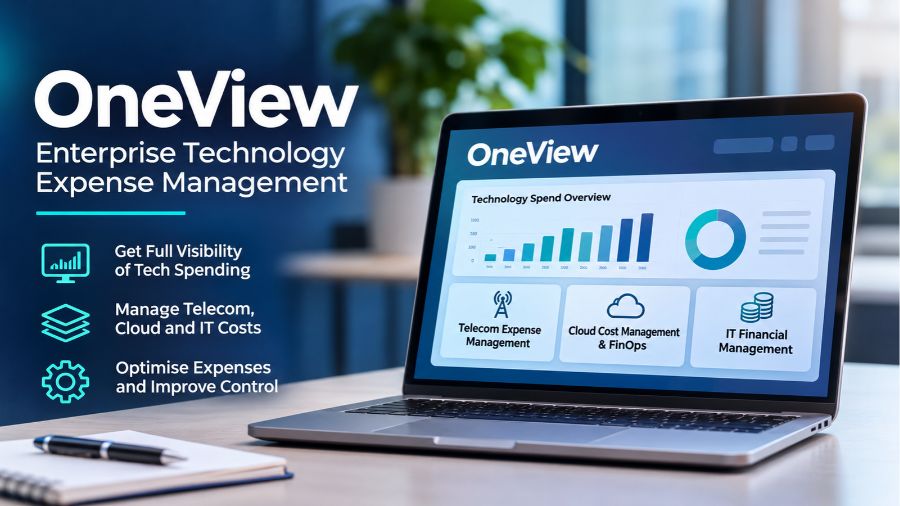
OneView is an enterprise technology expense management platform designed to help organisations monitor, manage, and optimise spending across telecommunications, cloud services, networks, and IT infrastructure. Developed by 1Nebula, the platform brings financial, operational, supplier, and technology usage information into one centralised environment. As businesses increasingly depend on cloud computing, mobile services, digital infrastructure, and multiple technology providers, controlling these expenses can become complicated. OneView aims to simplify this process by giving IT, finance, and procurement departments a shared view of technology costs, helping them identify unnecessary spending, improve financial accountability, and make more informed investment decisions.
What Is OneView?
OneView is a technology expense management platform developed by 1Nebula, a technology services and software company. Its primary purpose is to help enterprises understand and control the financial costs associated with their technology environments. Rather than managing telecommunications invoices, cloud subscriptions, network expenses, supplier agreements, and financial records through separate systems, organisations can bring relevant information together through OneView. The platform connects technology spending with the services, contracts, suppliers, users, departments, and budgets responsible for those expenses. This approach helps businesses move beyond basic expense reporting towards more structured financial management. OneView supports three major solution areas: Telecom Expense Management, Cloud Cost Management and FinOps, and IT Financial Management. These capabilities make it relevant to organisations with complex technology environments and multiple service providers.
Who Developed OneView?
OneView was developed by 1Nebula as part of its technology expense management offering. The company operates internationally, with offices listed in South Africa, the Netherlands, and the United Kingdom. Its experience in telecommunications expense management and technology cost optimisation informs the platform’s approach to managing enterprise IT expenditure. According to the company’s published information, its technology expense management experience spans nearly three decades. OneView has evolved to address the changing needs of organisations managing traditional telecommunications alongside cloud infrastructure and other digital services. The platform is positioned as a business-focused solution rather than a general-purpose budgeting application, with particular attention to technology costs, supplier relationships, usage information, and financial governance.
How Does OneView Work?
OneView works by bringing information from different technology and financial sources into a shared data environment. Businesses can supply information from vendor invoices, telecommunications systems, cloud accounts, contracts, asset records, enterprise resource planning systems, and financial databases. The platform then organises this information into a consistent structure, connecting individual costs with the suppliers, services, usage records, budgets, and departments associated with them. This makes it easier to identify discrepancies, understand spending patterns, allocate expenses, and investigate unexpected charges. Instead of relying entirely on manually prepared spreadsheets, finance and IT teams can use the consolidated information to support reporting and operational decisions. The overall process involves collecting information, standardising records, validating expenses, assigning costs to appropriate owners, and identifying opportunities for optimisation. The exact implementation depends on an organisation’s systems, available data, and selected OneView solutions.
Key Features of OneView
OneView combines several technology expense management capabilities within a shared platform. Its features are intended to help businesses improve financial visibility, reduce manual administrative work, and establish stronger control over technology-related spending. Rather than focusing exclusively on one type of expense, the platform addresses different parts of an enterprise technology environment.
Centralised Technology Expense Management
OneView provides a consolidated view of technology expenses across multiple suppliers and service categories. Businesses can bring telecommunications, mobile services, network infrastructure, cloud consumption, and other relevant technology costs into a common environment. This can make it easier for finance and IT departments to understand how much the organisation spends and which services contribute most to its overall technology budget. Centralised information also reduces dependence on disconnected reporting processes and makes comparisons between suppliers and departments more practical.
Cloud Cost Management and FinOps
Cloud Cost Management is an important component of OneView, particularly for organisations operating across multiple cloud environments. Cloud infrastructure expenses can change according to resource consumption, service configurations, storage requirements, and application workloads. OneView supports visibility into cloud spending, budget monitoring, cost allocation, and optimisation activities. Its FinOps capabilities help organisations connect cloud usage with financial responsibility, allowing technical and financial teams to work together when evaluating infrastructure costs. Businesses can use this information to identify unnecessary resource consumption, review budgets, and improve forecasting. However, the effectiveness of these activities depends on accurate usage data, appropriate integrations, and consistent cloud cost governance.
Telecom Expense Management
Telecom Expense Management helps businesses monitor and control spending on mobile devices, voice services, fixed-line connections, network services, and other telecommunications infrastructure. Organisations with large numbers of employees, locations, SIM cards, and service agreements can find it difficult to verify every invoice manually. OneView brings relevant billing, usage, supplier, and contract information together to support expense validation and accountability. It can help identify billing discrepancies, review service costs, monitor commercial agreements, and improve the management of telecommunications resources.
IT Financial Management
IT Financial Management focuses on connecting technology expenditure with an organisation’s wider financial planning processes. OneView supports cost allocation, budgeting, forecasting, financial reporting, showback, and chargeback activities. These capabilities help businesses understand how technology expenses relate to individual departments, business units, projects, and services. For example, an organisation may need to determine how much its marketing, operations, or finance department consumes in cloud and telecommunications services. Structured financial information makes these allocations easier to review and can improve transparency when departments are responsible for their technology budgets.
Reporting and Analytics
Reporting and analytics help organisations turn technology spending information into useful business insights. OneView brings financial and operational information together so decision-makers can examine spending patterns, review budget performance, investigate exceptions, and identify areas requiring attention. Reports can support internal financial reviews, supplier discussions, and technology investment planning. The value of these capabilities depends on the quality and completeness of the information entering the platform. Accurate source data is essential if organisations want dependable reporting and meaningful comparisons.
Integration With Business Systems
OneView is designed to work with information from different technology and financial environments. Its integration approach can bring together supplier billing records, cloud usage information, contracts, enterprise financial structures, and technology asset information. This is particularly useful for larger organisations that already depend on specialised software for accounting, procurement, infrastructure monitoring, and service management. Instead of requiring every department to abandon its existing systems, OneView aims to establish a common foundation for understanding technology costs. Available integrations and implementation requirements should be confirmed with the provider before deployment.
Benefits of Using OneView
The main benefit of OneView is its ability to provide a more connected understanding of enterprise technology expenditure. Businesses that manage numerous suppliers, cloud services, network connections, and telecommunications agreements can struggle to maintain accurate financial records across different departments. By consolidating relevant information, OneView helps organisations identify where money is being spent and who is responsible for individual costs. Better visibility can support more informed budgeting, improved supplier management, and the identification of unnecessary expenses. Its shared data model also helps IT, finance, and procurement teams work with consistent information rather than maintaining separate versions of technology spending records. Furthermore, automation and structured workflows can reduce repetitive administrative tasks, while specialist managed services may provide additional support for organisations that need assistance with ongoing expense management and supplier coordination.
Who Should Use OneView?
OneView is primarily designed for medium-to-large organisations and enterprises with complex technology spending requirements. Businesses operating across multiple offices, countries, cloud providers, telecommunications networks, and technology suppliers may find its centralised approach particularly relevant. IT directors can use the platform to understand infrastructure-related expenses, while finance departments can improve cost allocation, budgeting, and financial reporting. Procurement professionals can benefit from having supplier agreements, commercial terms, and billing information connected within the same environment. Cloud operations teams may also find its FinOps capabilities useful when managing cloud consumption and identifying potential savings. Smaller businesses with limited technology expenses may not need a specialised enterprise platform, particularly if their existing accounting and cloud management tools already provide sufficient visibility.
OneView and FinOps: Understanding the Connection
FinOps, short for Financial Operations, is a collaborative approach to managing the financial aspects of cloud computing. It encourages engineering, finance, and business teams to share responsibility for cloud spending rather than treating infrastructure costs as a separate technical concern. OneView incorporates FinOps-related capabilities through its Cloud Cost Management solution. This helps businesses connect cloud consumption with budgets, departments, resource owners, and financial reporting processes. For example, when a company operates several cloud accounts, it may need to determine which applications or departments generate particular expenses. A structured cost management system can help identify these relationships and make spending more transparent. OneView supports this process by bringing cloud cost information into its wider technology expense management environment, although successful FinOps practices also require organisational cooperation, appropriate resource tagging, and regular financial reviews.
Is OneView Suitable for Small Businesses?
OneView is positioned mainly towards enterprise technology expense management, so its suitability for small businesses depends on the complexity of their IT environments. A small company using only a few cloud subscriptions, mobile connections, and software services may find conventional accounting tools and provider dashboards sufficient. However, a growing organisation with multiple locations, numerous service providers, increasing cloud consumption, and complicated supplier agreements may benefit from more structured technology cost management. Before choosing OneView, businesses should consider their monthly technology expenditure, number of suppliers, reporting requirements, integration needs, and available implementation budget. The platform’s modular approach may allow organisations to begin with a particular expense management requirement and expand as their needs develop. Nevertheless, prospective customers should discuss the minimum implementation requirements and commercial arrangements directly with 1Nebula.
OneView Pricing and Availability
OneView does not provide a universally applicable public subscription price on its official platform. Its commercial arrangements are presented through business consultations and product demonstrations, suggesting that pricing should be discussed according to an organisation’s requirements. Factors that may influence the overall cost include the selected modules, number of technology services, data integration requirements, implementation scope, and whether managed services are included. Organisations interested in the platform can contact 1Nebula to discuss their technology environment and request information about available solutions. It is important to distinguish between the cost of accessing the software and the wider cost of implementation, integration, support, and ongoing operations. Businesses should request a detailed proposal explaining these elements before making a purchasing decision.
OneView Security and Data Governance
Security and data governance are important considerations for any platform handling enterprise financial information, supplier records, technology usage, and internal business data. OneView highlights security and governance as part of its enterprise offering and lists credentials including ISO 27001 and SOC 2 Type II on its platform information. These frameworks and assurance reports address different aspects of organisational security and control practices. However, organisations should not assume that a platform’s listed credentials automatically resolve every security requirement. Before adoption, prospective customers should review the applicable certification scope, independent assurance documentation, data processing arrangements, access controls, authentication mechanisms, hosting arrangements, and data retention policies. Businesses operating in regulated industries should also evaluate whether the platform’s deployment and contractual arrangements meet their internal compliance obligations.
Limitations and Challenges of OneView
Although OneView offers a centralised approach to technology cost management, implementing an enterprise platform can involve practical challenges. Bringing information together from different suppliers, cloud environments, financial systems, and legacy infrastructure requires reliable integrations and consistent data structures. Incomplete invoices, inconsistent supplier records, outdated contracts, and incorrect ownership information can affect reporting accuracy. Organisations may also need to invest time in establishing financial models, defining cost centres, assigning responsibilities, and training employees. Another consideration is that technology cost optimisation is not achieved simply by installing software. Businesses must regularly review reports, investigate exceptions, communicate with suppliers, and act on identified opportunities. Pricing and implementation requirements may also make the platform less suitable for smaller organisations with straightforward technology environments. These considerations should be evaluated alongside the potential operational and financial benefits.
OneView Alternatives and Competitors
Businesses exploring technology expense management software may also consider alternative platforms depending on their specific requirements. Cloud-focused organisations often evaluate solutions such as Flexera One and Apptio Cloudability for cloud financial management, cost visibility, and optimisation. Organisations looking for telecommunications expense management may also investigate specialised TEM providers and managed service companies. These products do not necessarily offer identical capabilities, and their suitability depends on the organisation’s technology environment, financial processes, integration requirements, and preferred operating model. OneView differentiates its offering through a shared technology cost foundation covering telecommunications, cloud financial management, and IT financial management. A meaningful comparison should therefore examine the depth of each solution rather than relying only on general feature lists or marketing claims.
The Future of Technology Expense Management
Technology expense management is becoming increasingly important as businesses adopt more cloud services, software subscriptions, artificial intelligence tools, and interconnected digital infrastructure. These developments can create new spending categories and make traditional financial tracking more difficult. Organisations need better ways to connect technology usage with budgets, operational responsibilities, and commercial agreements. Platforms such as OneView reflect a broader movement towards integrated technology cost intelligence, where financial information is connected with the operational systems generating the expenses. Future developments in automation, analytics, cloud financial management, and supplier data integration may further improve how enterprises identify inefficiencies and manage technology investments. However, the long-term value of these platforms will depend on reliable information, transparent governance, effective implementation, and the ability to translate financial insights into practical decisions.
Conclusion
OneView is an enterprise technology expense management platform developed by 1Nebula to help organisations manage and optimise spending across telecommunications, cloud services, networks, and IT infrastructure. Its combination of Telecom Expense Management, Cloud Cost Management and FinOps, and IT Financial Management provides a shared foundation for financial visibility and technology cost governance. By connecting supplier information, usage records, contracts, budgets, and operational responsibilities, the platform can help businesses improve reporting, identify unnecessary expenditure, and strengthen collaboration between IT, finance, and procurement departments. Although implementation, integration, data quality, and pricing require careful consideration, OneView offers an approach worth evaluating for enterprises seeking better control over increasingly complex technology environments.
FAQs
1. What is OneView used for?
OneView helps enterprises monitor, manage, and optimise technology expenses across telecommunications, cloud computing, networks, suppliers, and wider IT infrastructure.
2. Who developed the OneView platform?
OneView was developed by 1Nebula, a technology company offering enterprise technology expense management, cloud financial management, and related services.
3. Is OneView a cloud-based platform?
OneView is presented as an enterprise technology expense management platform that consolidates technology cost information from cloud, telecom, financial, and supplier systems.
4. Does OneView support FinOps?
Yes, OneView includes Cloud Cost Management and FinOps capabilities that help organisations monitor cloud spending, allocate costs, manage budgets, and identify optimisation opportunities.
5. Is OneView free to use?
OneView does not publish a universal standard subscription price. Interested organisations should contact 1Nebula for demonstrations, pricing information, and implementation details.
6. What are the main alternatives to OneView?
Alternatives depend on business requirements and include Flexera One, Apptio Cloudability, and specialist telecommunications expense management platforms.
Also read: TrafficOS