
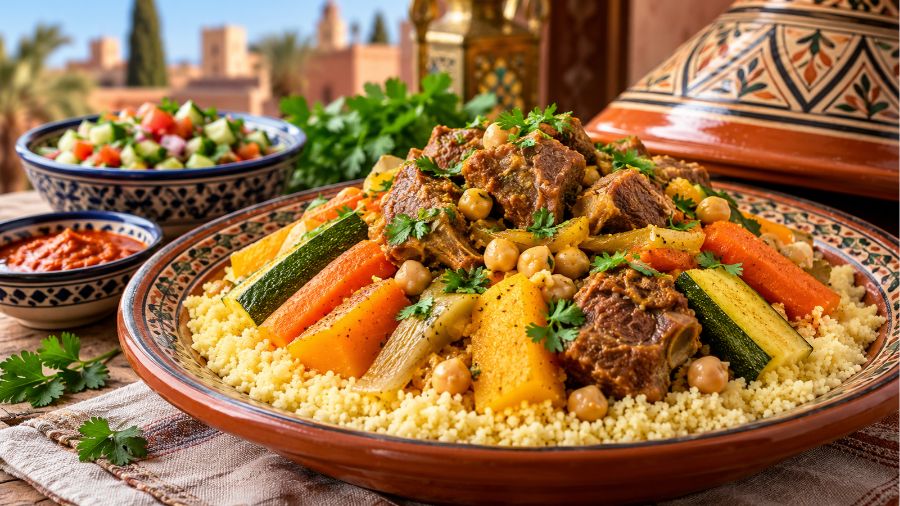
Kouskousi is an intriguing food term that leads curious readers toward the rich culinary traditions of North Africa and the wider Mediterranean region. Although the spelling may look unfamiliar, it is often used online in connection with couscous, a traditional semolina-based food enjoyed in countless homes. Its appeal lies in its simple ingredients, adaptable preparation, and ability to complement vegetables, meat, seafood, and flavorful sauces. Understanding Kouskousi means looking beyond the name to explore the food traditions, cooking techniques, and regional influences associated with similar dishes. While the term does not have one universally established definition in major culinary references, its connection with couscous makes it an interesting starting point for anyone exploring traditional Mediterranean cuisine.
What Is Kouskousi?
Kouskousi is a term commonly associated with couscous in online food discussions. Traditional couscous consists of small granules made from durum wheat semolina, which are prepared through a process of moistening, rolling, and steaming. The finished product has a light texture and a mild flavor that works well with a variety of ingredients. Unlike rice, which is a grain harvested directly from a plant, couscous is a processed wheat product. This distinction matters when discussing its ingredients, nutritional qualities, and cooking methods.
The spelling Kouskousi can create confusion because similar names appear in different culinary and linguistic contexts. Some websites use it as an alternative spelling for North African couscous, while other discussions involve small pasta products associated with Mediterranean cooking. These names should not automatically be treated as identical in every situation. Checking the original spelling, ingredient list, and preparation instructions is the best way to determine which food a particular recipe describes.
The Origins and History of Kouskousi
The best-documented culinary tradition associated with Kouskousi is North African couscous. The dish has deep roots among Amazigh communities, also known as Berbers, and has been prepared across the Maghreb for generations. Morocco, Algeria, Tunisia, Libya, and Mauritania all have distinctive couscous traditions, with regional differences in ingredients, seasoning, preparation, and serving style. Rather than belonging to one modern recipe or restaurant, couscous reflects a broad culinary heritage shaped by local agriculture, family customs, and centuries of cultural exchange.
Historically, couscous offered a practical way to transform semolina into a versatile food that could be stored, prepared in batches, and served alongside substantial stews. Traditional preparation often involved rolling semolina by hand and steaming the resulting granules over a simmering pot. The technique required patience and experience, particularly when cooks wanted consistently light, separate granules. Over time, the dish became an important part of everyday meals and special gatherings. Its cultural significance extends beyond the food itself because preparation and sharing can bring families and communities together.
Understanding the Meaning Behind the Name
The word Kouskousi is best approached as a spelling or naming variation whose exact meaning depends on the context in which it appears. The widely recognized English term is couscous, while related spellings and pronunciations occur across languages and regional food traditions. Differences in transliteration can make a familiar dish appear unfamiliar, especially when a word moves between Arabic, French, Greek, and English writing systems. However, a similar spelling alone is not enough to establish a precise linguistic origin or prove that a term is a traditional regional name.
This distinction is particularly useful when researching food online. Several websites may repeat the same explanation without providing independent evidence for it. Readers should therefore separate well-established facts about couscous from claims specifically about Kouskousi. The documented history of couscous is extensive, but the exact status of the less-standardized spelling requires more caution. Taking this approach provides a clearer understanding of the food without confusing an emerging search term with an independently verified culinary tradition.
Main Ingredients Used in Traditional Couscous
Traditional couscous is primarily made from durum wheat semolina and water. Semolina provides the structure, while a small amount of water helps the particles bind into tiny granules during preparation. Depending on the method and product, the granules may be processed and dried before being packaged. Commercial varieties are often designed for quick preparation, whereas traditional couscous may require repeated steaming and careful handling to achieve its characteristic texture.
Additional ingredients depend on the dish being prepared. Vegetables such as carrots, onions, zucchini, pumpkin, and tomatoes are common accompaniments, while chickpeas can add texture and plant-based protein. Meat, including chicken or lamb, may be included in regional recipes, and fish appears in certain coastal traditions. Spices such as cumin, coriander, paprika, ginger, turmeric, and black pepper can contribute warmth and depth. These ingredients are not mandatory components of every couscous dish; instead, they reflect the variety of cooking styles that have developed across different households and regions.
How Kouskousi-Style Couscous Is Traditionally Prepared
Traditional couscous preparation involves more than simply placing semolina in boiling water. Cooks begin by moistening the semolina and gently working it to form small granules. The granules are then steamed, often above a pot containing a simmering stew. During preparation, the couscous may be removed, loosened by hand or with a fork, and returned to the steamer. This process helps distribute moisture and produces a lighter texture than careless cooking might achieve.
Modern kitchens often use instant couscous because it saves time without requiring specialized equipment. Depending on the product, cooks generally place the granules in a heatproof bowl, add the amount of hot water or stock specified on the package, cover the bowl, and allow the liquid to absorb. The couscous is then fluffed gently with a fork. Exact liquid ratios and resting times vary by product, so following the manufacturer’s instructions is more reliable than assuming every variety cooks identically. Whether prepared traditionally or quickly, the key is to avoid excess moisture and separate the granules before serving.
Popular Ways to Serve Couscous
One reason couscous remains popular is its flexibility at the table. In North African cooking, it is frequently served with vegetables and a flavorful broth, sometimes accompanied by meat or chickpeas. The couscous absorbs the surrounding flavors while providing a soft, satisfying base for the rest of the meal. Some preparations are mild and comforting, while others use carefully balanced spices to create a more pronounced flavor. The choice of ingredients often reflects local availability, family preferences, and the occasion.
Couscous can also be served cold or at room temperature in salads. A simple version combines prepared couscous with chopped cucumber, tomatoes, parsley, mint, lemon juice, and olive oil. Roasted vegetables can make the dish heartier, while chickpeas provide additional substance. For a sweeter variation, some cooks combine couscous with dried fruit, nuts, and warming spices. These modern adaptations demonstrate how a traditional ingredient can work in different meal styles without requiring a completely new cooking technique.
Nutritional Value and Dietary Considerations
The nutritional value of a couscous-based dish depends on the variety used, serving size, and accompanying ingredients. Traditional couscous made from refined durum wheat semolina supplies carbohydrates, which the body uses as an energy source. It also provides some protein and small amounts of other nutrients, although the exact amounts vary by product. Whole-wheat versions generally provide more fiber than refined varieties, making them a useful option for people who want to increase their intake of whole grains.
The accompanying ingredients can substantially change the nutritional balance of the meal. Vegetables contribute vitamins, minerals, and fiber, while chickpeas add plant-based protein and additional fiber. Eggs, fish, chicken, or other protein-rich foods can make a serving more substantial. Olive oil and nuts contribute unsaturated fats, although portion sizes still matter when managing overall energy intake. Couscous is made from wheat and contains gluten, so it is not suitable for people who need to avoid gluten because of celiac disease or another medically established requirement. Anyone with specific dietary needs should check product labels and choose ingredients accordingly.
Differences Between Couscous and Small Mediterranean Pasta
Couscous and small pasta products can look remarkably similar, especially when both are shaped into tiny granules or beads. However, their production methods can differ. Traditional couscous is formed from moistened semolina particles that are rolled into granules and cooked, commonly through steaming. Small pasta products are generally made by mixing flour or semolina with water, shaping the dough, and drying it. Similar appearance does not necessarily mean identical ingredients, texture, or preparation requirements.
The distinction is important when following a recipe described as Kouskousi. A recipe might refer to traditional North African couscous, a small pasta product, or a local preparation with its own characteristics. Before cooking, examine the product packaging and recipe instructions. If the ingredient is designed to be boiled like pasta, substituting instant couscous without adjusting the method may produce a disappointing result. Likewise, a product intended for steaming or soaking may not behave as expected if treated like ordinary pasta.
Cultural Importance and Family Traditions
Couscous has a role in North African food culture that extends well beyond its ingredients. In many households, preparing it is connected with hospitality, family gatherings, celebrations, and shared meals. The dish can be made in quantities suitable for several people, and its flexible serving style allows cooks to accommodate different preferences. A central platter of couscous with vegetables and stew can encourage everyone at the table to participate in the same meal, creating a sense of connection that goes beyond convenience.
Traditional food practices also help preserve cultural knowledge. Cooking methods, seasoning preferences, and serving customs are often passed from one generation to another through observation and shared experience. Although contemporary lifestyles have encouraged quicker cooking methods, traditional techniques remain meaningful to many families. Recognizing this heritage means appreciating the communities that developed and maintained these practices rather than treating couscous simply as another fashionable ingredient.
Common Misunderstandings About Kouskousi
One common misunderstanding is that Kouskousi must be a completely separate food with a universally accepted recipe. Available descriptions do not establish such a definition. The term is frequently linked to couscous, but its precise meaning can vary across websites and contexts. A careful explanation should acknowledge this uncertainty rather than inventing a definitive origin, claiming a single official recipe, or assigning the name to one particular country without sufficient evidence.
Another misconception is that couscous is a grain in exactly the same sense as rice or quinoa. Although it resembles small grains when cooked, traditional couscous is made from processed wheat semolina. People also sometimes assume that all couscous products require the same cooking method. In reality, traditional and instant varieties can differ significantly in preparation time and technique. Understanding these basic distinctions makes it easier to choose the right product, follow recipes accurately, and appreciate the culinary tradition behind the food.
Tips for Preparing a Better Couscous Dish at Home
Good couscous begins with selecting the right product for the intended recipe. Read the packaging to determine whether the couscous is instant, traditional, or a larger-grained variety. Measure the cooking liquid carefully and avoid adding more than necessary, since excessive moisture can make the texture heavy or sticky. Once the couscous has absorbed the liquid, gently separate the granules with a fork rather than pressing them together. A little olive oil or butter can help improve flavor and texture when appropriate for the recipe.
Seasoning is equally important. Cooking couscous with vegetable stock instead of plain water can add depth, while fresh herbs and lemon juice bring brightness to the finished dish. If serving it with a stew, allow the couscous to absorb some of the sauce without leaving it submerged in too much liquid. Add vegetables, chickpeas, or a suitable protein to create a balanced meal. Finally, taste the dish before serving and adjust the salt, acidity, and spices gradually. Small, thoughtful adjustments often produce a better result than adding many ingredients at once.
Why Kouskousi Continues to Attract Online Interest
Unfamiliar food terms naturally encourage people to search for explanations, especially when a word resembles something they already know. Kouskousi attracts curiosity because it appears connected to a widely recognized dish while using a less familiar spelling. Readers may encounter it in an article, recipe, product description, or search result and want to know whether it represents a new ingredient, a regional expression, or another name for an established food. This uncertainty creates an opportunity for useful educational content.
The most valuable explanations provide clear definitions while distinguishing confirmed information from interpretation. Rather than presenting every online claim as established fact, a reliable article explains the connection with couscous, describes the ingredients and cooking methods of the documented dish, and acknowledges that the spelling itself is not universally standardized. This approach gives readers practical information they can use while respecting the differences between languages, regional cuisines, and individual food traditions.
Conclusion
Kouskousi is an interesting food-related term that commonly appears in discussions of couscous, one of North Africa’s best-known culinary traditions. Although the spelling does not have one universally established definition, its connection with couscous provides a useful starting point for exploring semolina-based cooking, regional recipes, nutritional considerations, and cultural heritage. Traditional couscous is valued for its versatility, straightforward ingredients, and ability to complement vegetables, legumes, meat, seafood, and flavorful sauces. It can be prepared through traditional steaming methods or convenient modern techniques, depending on the product being used. By understanding the differences between related food names and checking reliable preparation instructions, readers can avoid common misconceptions and make better choices in the kitchen. Ultimately, the story associated with Kouskousi highlights the importance of approaching unfamiliar food terms with curiosity, cultural awareness, and a commitment to accurate information.
Also read: Sabrina Carpenter Age